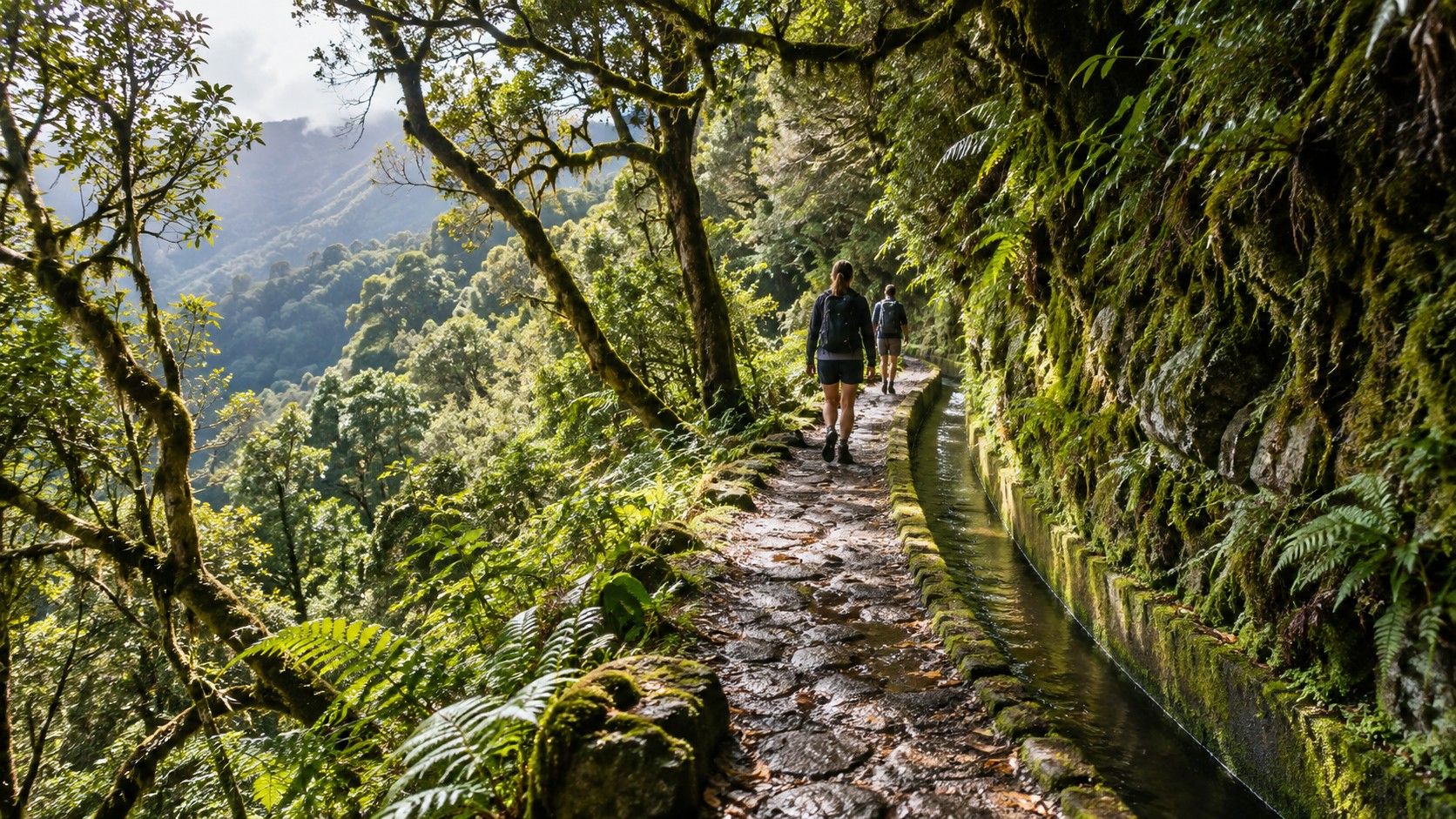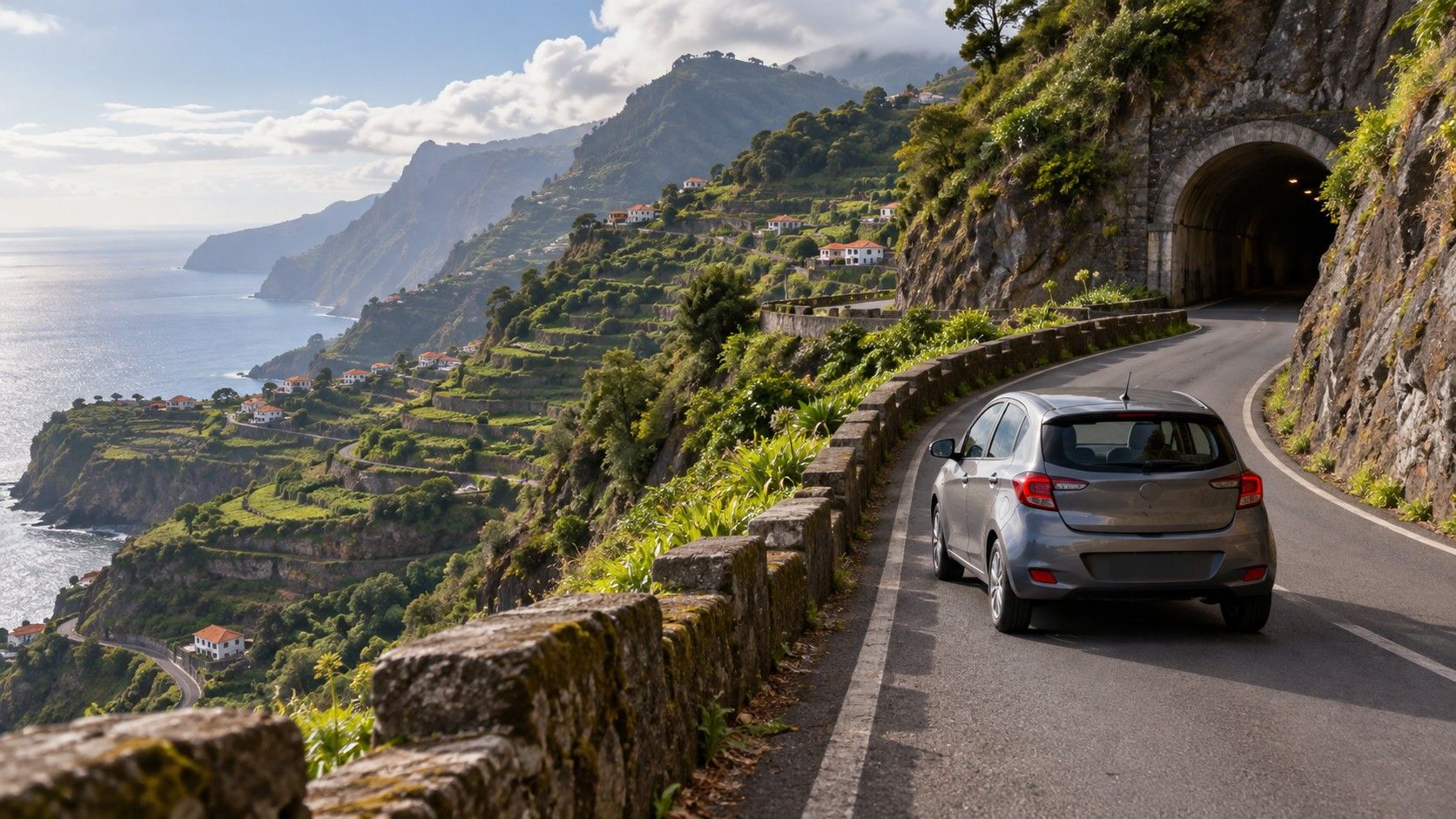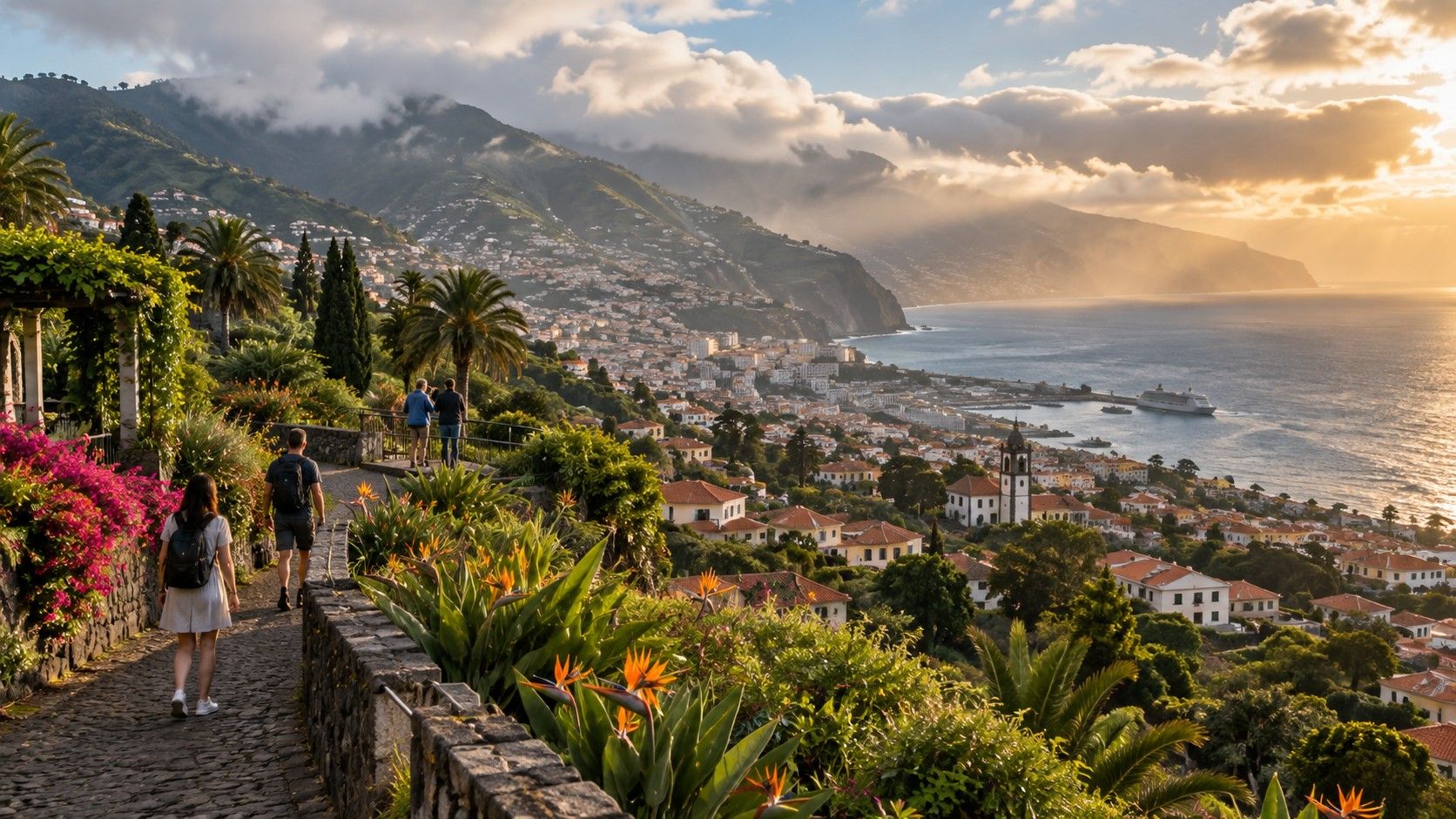
Madeira is often sold as an island of permanent spring, which is true in the same loose sense that Britain is permanently mild: it describes the averages and hides the day you actually get. Choosing the best time to visit Madeira is less about finding one perfect month than deciding which inconvenience you can tolerate. A walker needs clear ridges and cool air; a swimmer wants a warm sea; a driver may care more about daylight and empty parking spaces. The useful comparison is between conditions, not postcard temperatures.
How Madeira's seasons actually differ
The island has an Atlantic climate moderated by the ocean, so temperatures in Funchal change gently rather than dramatically. Winter days on the south coast are commonly mild enough for lunch outdoors, while summer heat is usually less punishing than on the Portuguese mainland. Yet altitude matters fast. A pleasant 21°C by the marina can become cold wind and wet cloud at Pico do Arieiro, more than 1,800 metres above sea level. Ten kilometres on a map can amount to another season.
The central mountains squeeze moisture from clouds arriving from the north. That helps explain why Funchal and Ponta do Sol may be bright while Santana, Ribeiro Frio or the Encumeada pass sit under mist. It also explains why a generic Madeira weather by month chart is only a starting point. Forecasts should be checked for the coast and mountains separately, preferably again on the morning of a hike. I have learned to distrust any plan that depends on one distant summit forecast remaining accurate for three days.
Rain is more frequent from late autumn through early spring, but it rarely follows a neat all-island pattern. A shower can be short-lived on the south coast and persistent beside a levada in the Laurisilva forest. Conversely, summer is not a guarantee against low cloud, strong wind or occasional heavy rain.
| Period | Typical advantage | Main compromise | Best suited to |
|---|---|---|---|
| December–February | Mild coast, quieter stays | More rain, short days, uncertain ridges | Flexible sightseeing and city breaks |
| March–May | Flowers, green landscapes, walking temperatures | Changeable mountain weather and festival demand | Gardens, mixed hiking and touring |
| June–August | Long days, warm sea, lower rain risk | Busier trails, higher prices, coastal heat | Swimming and ambitious itineraries |
| September–November | Warm ocean, softer crowds | Rain risk rises later in autumn | Swimming plus hiking with flexibility |
Winter works when the itinerary can bend
December to February can be excellent value for travellers who are happy to make decisions each morning. Funchal remains lively, hotels often cost less outside Christmas and New Year, and popular viewpoints are less congested. The south-coast promenade may feel almost summery at midday. After sunset, however, damp air makes a light jacket useful, and daylight is too limited for a casual late start on a long walk.
Winter is not automatically a poor Madeira travel season for walkers. Lower routes such as coastal paths or sheltered levadas can be comfortable without summer heat. The problem is reliability. Heavy rain may leave waterfalls crossing paths, increase rockfall risk or lead to official trail closures. High routes can disappear into cloud even when Funchal looks harmless. A sensible winter week therefore keeps two or three low-level alternatives and never treats a closed path as an invitation to step around a barrier.
Holiday dates create an exception to the quieter-season rule. Funchal's Christmas lights and New Year celebrations draw substantial demand, and central rooms can sell early. Carnival dates, which vary each year, produce another short burst of activity. Anyone travelling for a specific festival should confirm the official dates before booking flights; anyone seeking silence should deliberately avoid them.
Spring brings flowers, walkers and unsettled ridges
March, April and May are the easy recommendation for travellers who want gardens, green slopes and moderate walking temperatures. Spring flowers are visible across the island, while the Flower Festival turns central Funchal into an event rather than an ordinary base. That is appealing, but it also changes room prices, traffic and restaurant demand. The festival schedule moves with the calendar, so assumptions based on last year's dates are risky.
April and May often give a useful balance of daylight and manageable heat. A levada morning can still feel cool in the forest, then warm quickly once the path leaves shade. Layers earn their luggage space here: a thin waterproof, a warm mid-layer for exposed ridges and sun protection for the coast. An umbrella is less useful on a narrow trail in crosswind.
The phrase “spring weather” remains too broad for a mountain day. Clouds can build against the massif while the sea remains blue, and visibility at Pico do Arieiro may change within an hour. If a high-level walk is the trip's priority, I would place it early in the week but move it without sentiment when the mountain forecast is poor. Saving a summit for the final morning is a common gamble with no recovery day.
Summer favours swimming, early starts and reservations
June through August offers long daylight, generally lower rainfall and the most dependable conditions for a dense Madeira travel plan. Sea temperature rises gradually, natural pools become more inviting, and evenings are easy on the coast. The trade-off is predictable: flights, rental cars and the most convenient accommodation can cost more, while famous trailheads and Porto Moniz fill earlier.
Summer heat is uneven. Funchal, Câmara de Lobos and the south-west can feel hot in direct sun, especially on steep streets where every “short walk” gains elevation. The forest remains cooler, and a windy summit may still require an extra layer. Starting a popular walk early is less about heroic discipline than avoiding full car parks, exposed midday sections and the procession that develops on narrow passages.
August is often the busiest conventional holiday month. It suits families tied to school dates and travellers who place swimming above solitude. Those who dislike crowds should look at June or early July, while remembering that June can sometimes bring a persistent low cloud layer around the coast. Even in peak season, staying overnight outside Funchal changes the experience: villages become notably calmer after tour vehicles leave.
Autumn offers a warm sea with an increasing weather bet
September is one of the strongest answers to when to go to Madeira. The ocean retains summer warmth, days remain reasonably long, and European school-holiday pressure begins to ease. Conditions can support both swimming and serious walking, provided exposed routes are moved away from windy or cloudy days.
October can also work well, particularly for travellers who prefer softer light and moderate temperatures. By November, unsettled spells become more likely and daylight shortens noticeably. None of this means continuous rain. It means a rigid itinerary becomes progressively less sensible. A week divided between Funchal, the north coast and walking has more resilience than seven pre-booked outdoor activities with fixed dates.
Autumn sea conditions deserve separate attention from air temperature. The water may be warm while swell makes an exposed bathing place unsafe. Natural pools can close temporarily, and a sunny sky does not overrule warning signs or staff instructions. I would keep one sheltered swimming option and treat access as a same-day decision.
A month-by-month decision is really a priority list
For flowers and gardens, April or May is the obvious window, accepting variable ridges and festival crowds. For the best chance of long hiking days, June through September provides stronger odds, with early starts essential in July and August. For warm-water swimming with slightly less pressure, September and early October are persuasive. For lower prices and a quieter Funchal, January or February can be rewarding if the plan contains weather-proof alternatives.
Travellers combining several priorities often do best in May, June, September or early October. These shoulder periods do not eliminate compromises; they distribute them more evenly. Accommodation location matters as much as month. The sunnier south coast offers a practical base for uncertain weather, while a north-coast stay makes forest walks and local evenings easier but accepts a greater chance of cloud.
Whichever month wins, leave at least one flexible day. Check trail status, summit webcams where available, wind and hourly rain rather than relying on a single weather icon. Put the most weather-sensitive activity on the clearest day, not on the date it occupied in a spreadsheet. Madeira rewards planning, but it punishes the sort of planning that refuses to notice the mountain has vanished.