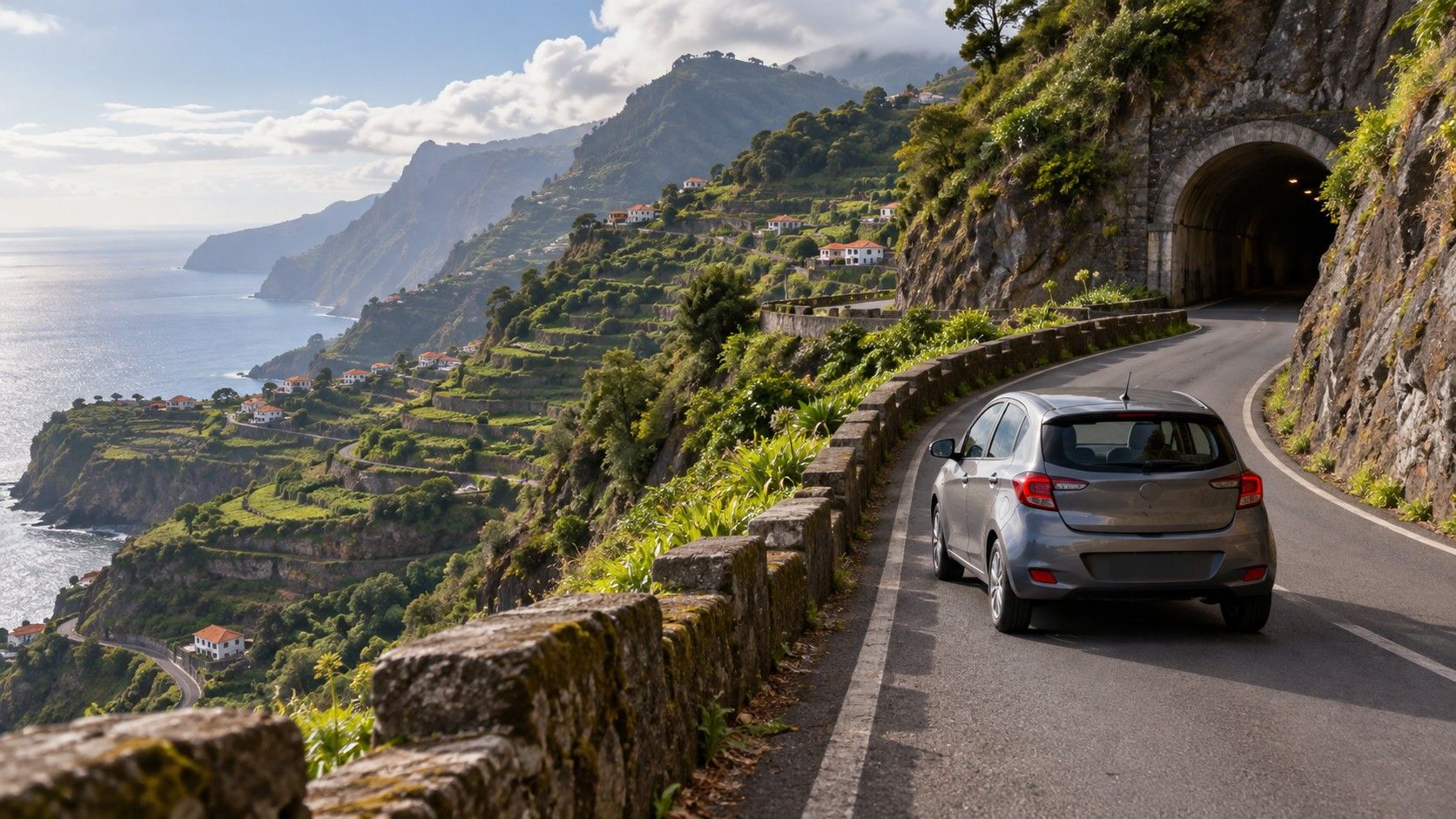
Driving in Madeira is neither the white-knuckle ordeal described in some forums nor a relaxed coastal cruise. The main roads are excellent, the tunnels remove much of the old mountain slog, and distances look tiny. Then a hotel entrance appears halfway up a lane that resembles a ramp, a bus rounds the corner, and the promised twenty-minute trip needs another quarter-hour. A rental car is enormously useful here, but the right car and a little restraint matter more than confidence borrowed from driving at home.
What makes Madeira driving different
The Via Rápida and newer express roads make journeys around Funchal and much of the south coast straightforward. They have proper barriers, clear exits and a sequence of tunnels that can make the island feel almost too easy. The difficulty begins between that network and the final destination. Village streets climb sharply, bend around houses and narrow without warning. Navigation apps may choose the mathematically shortest lane rather than the route a local would use.
Time estimates also hide elevation. Funchal to Câmara de Lobos is a modest drive; reaching a viewpoint above either town adds slower bends and awkward junctions. On the north coast, a road that appears parallel to the sea may repeatedly climb and descend. I add roughly a third to optimistic map estimates when the destination is a trailhead or mountain village, then more for parking.
Madeira road conditions are generally good on principal routes, but rain changes the smaller roads quickly. Wet leaves, runoff and occasional stones are reasons to slow down, not scenery to photograph through the windscreen. Mountain fog can reduce visibility within minutes. Headlights, a bigger following distance and willingness to turn back are more valuable than a powerful engine.
Choosing the car and insurance before the counter
A small car is easier in parking garages and village lanes, but the cheapest low-powered model may struggle when fully loaded on a steep climb. That does not mean hiring a large SUV. Width is a daily inconvenience in Madeira, while extra ground clearance is rarely needed on normal visitor routes. A compact car with a reasonably capable engine is the useful middle ground.
An automatic transmission costs more and often sells out early, yet it removes much of the stress from steep starts and stop-start traffic. Drivers comfortable with a manual should still be honest about hill starts under pressure. The moment to discover that the handbrake is unfamiliar is not on a narrow road above Funchal with another car close behind. Reserve the required transmission explicitly and check it on the confirmation.
When renting a car in Madeira, compare the deposit, excess and exclusions rather than only the daily rate. Tyres, glass, mirrors, underside damage and clutch misuse may be treated differently from collision damage. Photograph every panel, wheel and mirror at collection, including existing scrapes low on the bumpers. Record the fuel level and odometer. A calm two-minute video in the car park is better evidence than a rushed argument on return.
| Choice | Advantage | Compromise |
|---|---|---|
| Small manual | Cheaper and easy to park | More work on steep starts; check engine power |
| Compact automatic | Relaxed on hills and in traffic | Higher price and limited availability |
| Large SUV | Room for people and luggage | Awkward width in villages and garages |
| Full-cover option | Lower financial uncertainty | Read exclusions and claim procedure carefully |
Steep streets, tunnels and mountain roads
On a steep manual start, use the handbrake rather than balancing the car on clutch and throttle. Leave space behind buses and delivery vans because they may stop abruptly or reverse to negotiate a corner. Descents deserve a lower gear so the engine shares the work; riding the brakes down a long slope invites heat and fading. An automatic may have a manual or low-gear mode for the same reason.
Tunnels are frequent and usually easy, but sunglasses, condensation and sudden changes in light can briefly obscure lane markings. Keep lights on and avoid last-second lane changes near exits. Roundabouts generally follow the familiar rule of yielding to traffic already circulating, though local lane behaviour can be brisk. If an exit is missed, continue and reroute rather than cutting across.
Older mountain roads can be scenic but are not automatically the clever route. A navigation app may send traffic along the former coast road when the tunnel road is faster and safer. Some old sections close because of rockfall. Gates and signs are decisive, even if a digital map insists the road continues. The same applies after storms: official restrictions outrank the route saved on a phone.
Passing on narrow lanes works through patience. Use a wider spot, fold mirrors if necessary and let the driver with the easier reversing route move. Locals may approach faster because they know every bend; that knowledge does not transfer to a visitor. Pull over when safe and let a queue pass. Driving slowly is sensible, but stopping blindly just beyond a bend is not.
Parking in Funchal and at village stops
Funchal parking is easiest in a marked paid garage. Central garages remove the search for street spaces and the uncertainty of steep parallel parking, though ramps and bays can be tight. Check opening hours before leaving the car for dinner and photograph the level or bay number. A pin dropped at the pedestrian entrance is not always useful because the vehicle entrance may be on another street.
Street colours, signs and payment rules vary by zone. Never assume an apparently unused strip is free simply because other cars are present. Hotel parking deserves confirmation before booking: “parking nearby” can mean a public garage several streets and considerable elevation away. If the accommodation supplies a private space, ask about vehicle size and access.
At popular viewpoints and trailheads, the first legal space may be better than circling for the perfect one. Arrive early for Pico do Arieiro, Rabaçal access and other famous starts, especially in summer. Do not leave the car on a bend, block residents' gates or imitate informal parking that narrows the road. Rental damage is inconvenient; a tow or collision consumes a day.
Village stops are often easier at a municipal car park on the edge than in the historic centre. In Câmara de Lobos, Santana or Porto Moniz, a five-minute walk can spare twenty minutes of manoeuvring. Before walking away, look at the slope and turn the wheels appropriately, engage a gear or park mode, and set the handbrake firmly.
Fuel, breakdowns and the checks that protect the return day
Fuel stations are common around Funchal and larger towns, less convenient late at night in remote areas. The island is small, but repeated climbs increase consumption. Note whether the rental uses petrol or diesel and what label appears inside the fuel flap. The return policy may require a full tank from a nearby station, so save the receipt and photograph the gauge at drop-off.
For a puncture or warning light, move to a safe place if possible and call the rental company's stated assistance number. Do not improvise a repair that breaches the agreement. Save the number offline, along with the contract and location of any supplied safety equipment. In a tunnel, follow emergency signage and use the marked refuge or phone where instructed.
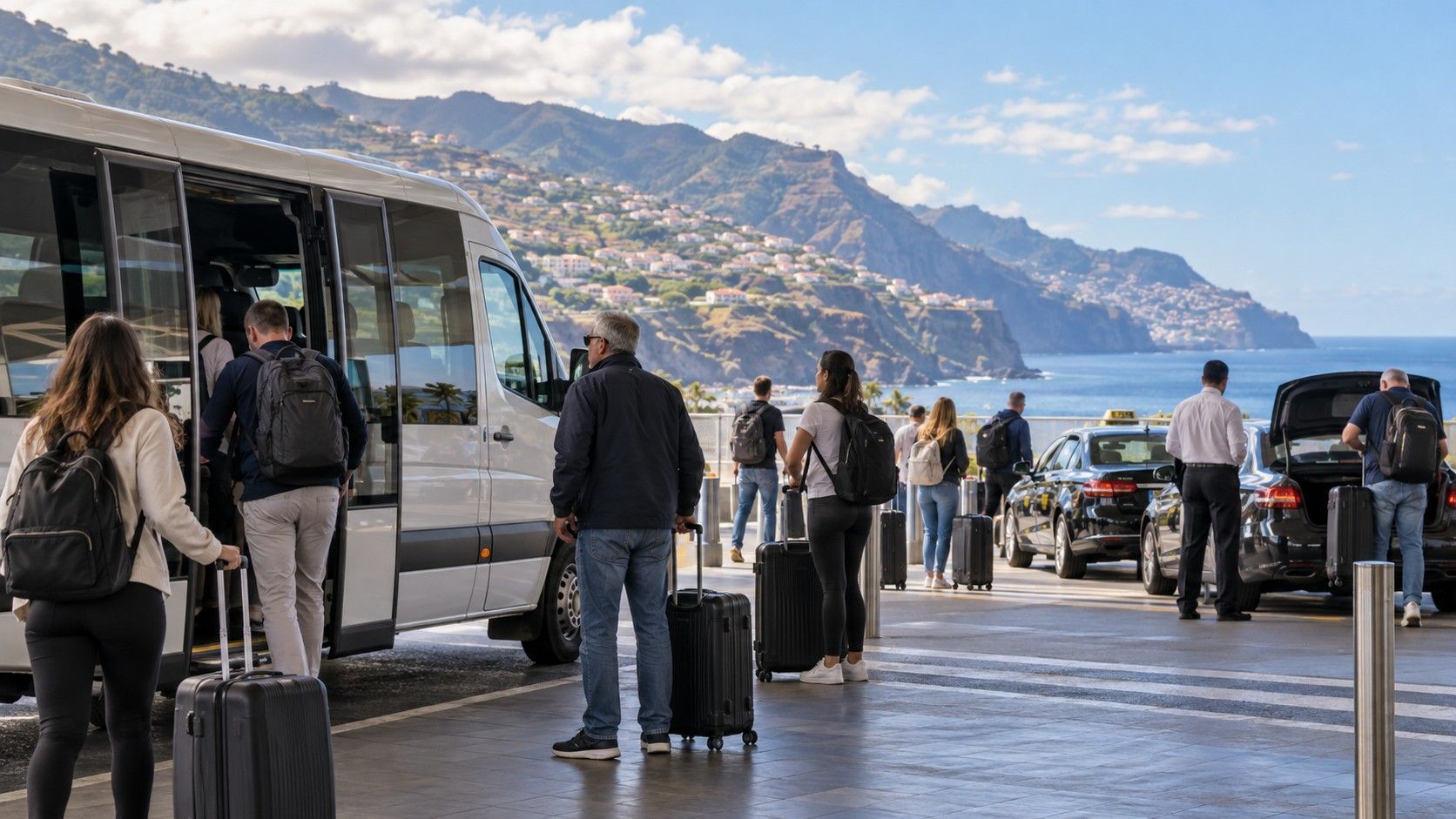
On return day, allow time for fuel, traffic around Funchal and the airport handover. Inspect the cabin, door pockets and boot before surrendering the key. Take a final set of exterior photographs in the return area and capture the mileage and fuel display. If staff are present, obtain a signed or emailed acceptance; if it is an unattended drop, document where and when the key was deposited.
The basic decision is simple. Hire a car if remote walks, north-coast villages and flexible weather swaps matter. Choose a compact automatic if steep starts already sound tiresome, and select insurance after reading what it actually covers. Madeira driving becomes manageable when speed is not the objective. The island is close together on paper; the roads ask you to treat each climb as real distance.