Madeira is a strong swimming destination, but it is not a conventional beach island. The coast is steep, Atlantic swell reaches exposed bays, and many of the easiest entries are engineered lidos or volcanic pools rather than long sand beaches. Choosing where to swim in Madeira is therefore a question of conditions, access and confidence—not simply finding the prettiest pin on a map.
Why Madeira is not a typical beach island
The island rises sharply from deep water, leaving little space for wide natural beaches. Pebbles, dark volcanic sand and rock platforms are normal. Imported pale sand exists at Machico and Calheta, while Porto Santo, reached by ferry or flight, offers the long golden strand many visitors initially imagine. On Madeira itself, the variety is the attraction: a sheltered town bay one day, a seawater pool behind lava walls the next.
Atlantic weather dictates more than the calendar. A calm-looking promenade does not guarantee a calm entry around the headland, and winter swell can close pools or cover pebble beaches with breaking water. Flags, barriers and lifeguard instructions override a travel plan. I would never use the presence of local swimmers alone as proof that an unfamiliar rock entry is suitable; they may know the current, underwater ledges and exit points.
Facilities also vary widely. A paid lido may provide changing rooms, showers, lockers, a ladder and supervised water. A scenic cove may offer none of them and require a steep path. The best beaches in Madeira are different for a family with children, a confident open-water swimmer and someone who wants a comfortable hour beside the sea.
| Place | Water entry | Best fit | Check first |
|---|---|---|---|
| Machico | Sheltered sandy beach | Families and easy bathing | Busy periods and parking |
| Calheta | Protected imported-sand beach | Calmer resort day | Space and local conditions |
| Seixal | Black sand, open bay | Scenery and capable swimmers | Swell and shore break |
| Porto Moniz | Managed volcanic pools | Facilities and distinctive setting | Closure notices |
| Doca do Cavacas | Lava pools with ladders | Funchal-based visitors | Sea state and seasonal hours |
Machico and Calheta when easy sand matters
Machico beach is one of the simplest answers for travellers who want sand, nearby cafés and a relatively sheltered swim. The bay is close to the old centre and reachable without a mountain road detour. Part of the waterfront is pebble and part has imported yellow sand, so look at the precise section before spreading out. Breakwaters reduce exposure, although no barrier turns the Atlantic into a swimming pool.
Machico works particularly well on arrival or departure day because it is near the airport. Parking and beach space can tighten on warm weekends. Families should still watch depth and flags rather than assuming sand means shallow water everywhere. The practical advantage is not untouched nature; it is a manageable combination of access, services and an uncomplicated route back to accommodation.
Calheta beach on the southwest coast is another imported-sand option, divided by protective structures beside the marina. It often feels warmer and more resort-like than the north coast. The enclosed setting suits a low-effort beach day, with food and facilities nearby. It can also feel crowded, and visitors staying in Funchal must account for the drive and parking. I would choose Calheta for predictability, not for solitude.
Seixal: volcanic sand with an Atlantic warning label
Seixal beach earns attention for black sand beneath green cliffs and waterfalls. In still conditions it is one of Madeira's most memorable coastal settings. The sand is natural volcanic material, darker and sometimes hotter under direct sun than the imported sand at Machico. Access leads down into the village area, where parking is limited and the final approach can become congested.
The same open north-coast position that creates the view also exposes the bay to swell. Shore break can be forceful, water depth changes, and conditions that suit photographs may not suit relaxed bathing. Check the sea before changing, watch several sets of waves, and treat red flags or local closures as final. Turning up after a long drive does not create an obligation to enter.
Seixal also has pool options nearby, which can provide an alternative when the beach is rough, subject to their own access and opening conditions. Bring footwear suitable for wet paths and a bag that keeps valuables away from sand and spray. For young children or uncertain swimmers, Machico or a supervised lido usually offers an easier decision.
Porto Moniz and the logic of Madeira's natural pools
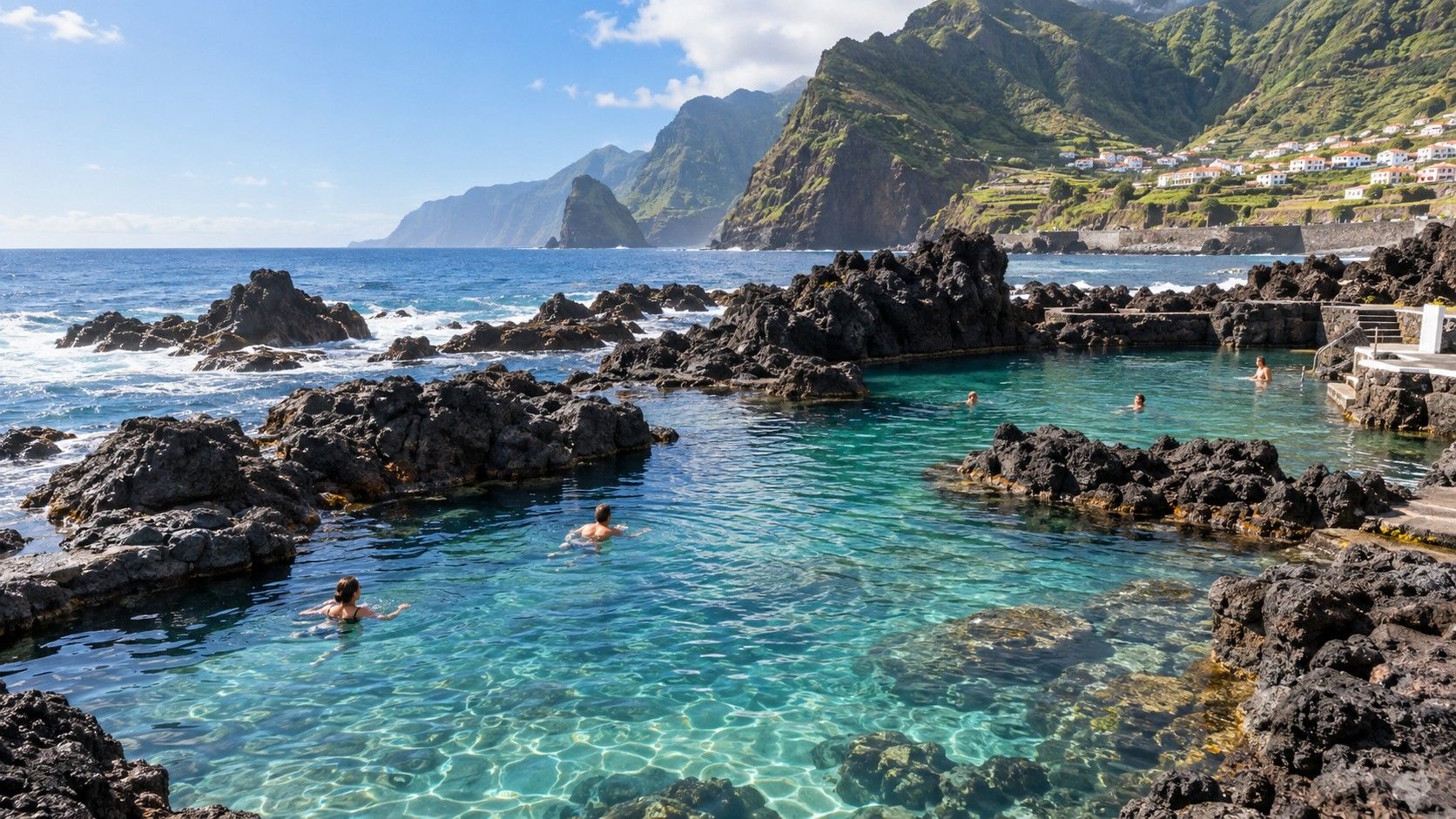
Madeira natural pools use volcanic rock formations to separate bathing water from the open ocean while allowing seawater to refresh them. Porto Moniz has the best-known complex. The managed pools offer ladders, changing facilities and supervision during operating periods, with jagged lava shapes preserved around more accessible swimming areas. An entry fee is reasonable payment for infrastructure that removes much of the awkwardness of a rock coast.
Natural does not mean immune to weather. Large swell can send water over the outer walls and force closures. Check the day's status before driving across the island solely for a swim. Water temperature remains Atlantic rather than heated-pool warm, and rock surfaces can be sharp or slippery. Follow marked entry points instead of scrambling over the outer formations.
There are also free bathing areas in Porto Moniz, but they provide a different level of management and comfort. Compare the actual facilities rather than treating every pool visible on a map as interchangeable. A supervised complex is better for a first visit; a simpler pool may suit experienced visitors in calm conditions who have already identified a safe exit.
Doca do Cavacas, Lido and convenient swimming in Funchal
Doca do Cavacas places compact lava pools at the western edge of Funchal, with views toward Cabo Girão. It is convenient for visitors staying around the Lido hotel zone and delivers the volcanic-pool experience without a full north-coast drive. Space is limited, access involves steps, and opening depends on season and sea conditions. Arrive early on a clear summer day rather than expecting a quiet sunset swim.
The Lido bathing complex is the practical alternative when facilities matter most. Pools, sun terraces, sea access and services make it easy to spend several hours. Other public swimming complexes and sea-entry points line the Funchal coast, but not every ladder is suitable in every swell. These places are less dramatic than Seixal and often much more usable.
For travellers without a car, a good lido can be the better beach day because it removes parking, winding roads and the risk of finding a distant natural site closed. Check current hours and admission locally. The Madeira coast rewards flexibility: build the day around the safest open place, then treat scenery as the bonus.
Read the water before entering
Start with flags, warning boards, lifeguards and barriers. Then look at how waves behave over several minutes, not during one quiet gap. Identify the exit before entering, especially at ladders where surge can lift and drop a swimmer against metal or rock. Avoid isolated entries when no one can see you, and do not swim near harbour traffic or fishing lines.
Water shoes help on pebbles and rough pool edges but do not create grip on algae-covered rock. Keep children within reach around pool margins; a wall that stops waves most of the time can still receive spray or overtopping. Secure towels and phones above the wet line. If conditions deteriorate, leaving early is sensible rather than disappointing.
A useful plan has alternatives: Machico for sand and ease, Porto Moniz for managed volcanic pools, Seixal for a calm-weather black-sand visit, and Funchal's lidos for convenience. Madeira's finest swimming days come from matching the place to the ocean that morning. Trying to force a fixed list is how a beautiful coast becomes a frustrating or unsafe one.