Madeira food is easiest to understand as practical island cooking: grilled meat, deep-water fish, bread rubbed with garlic, seasonal fruit and drinks with more strength than their sweetness suggests. The famous combinations are worth trying, but menus become more interesting once you stop treating espetada and banana-topped fish as compulsory trophies and start ordering for the place, appetite and catch.
How to read a Madeiran menu without over-ordering
Many traditional restaurants divide the menu into starters, fish, meat and sides, but portion logic varies. A skewer may be listed for one person and still arrive with enough beef to share, while side dishes such as milho frito, salad and chips are sometimes separate. Ask how large the plate is and whether sides are included. This is more useful than assuming price alone reveals portion size.
Couvert items—bread, butter, olives or spreads placed on the table—may be charged if consumed. Keep what you want and politely decline the rest. Bolo do caco is often worth accepting, particularly when it arrives warm with garlic butter, but filling up before a large meat course is remarkably easy. In tourist streets, photographs and multilingual menus are normal; they do not prove poor food, just as handwritten Portuguese does not guarantee excellence.
Look for short lists, visible turnover and staff who can explain the day's fish. At lunch, prato do dia can offer good value and a clearer view of everyday Madeira food than a long tasting checklist. Markets are useful for learning names and seeing produce, though a prominent location does not automatically mean the lowest price. Compare before buying fruit by weight.
Espetada, picado and the meat dishes people actually share
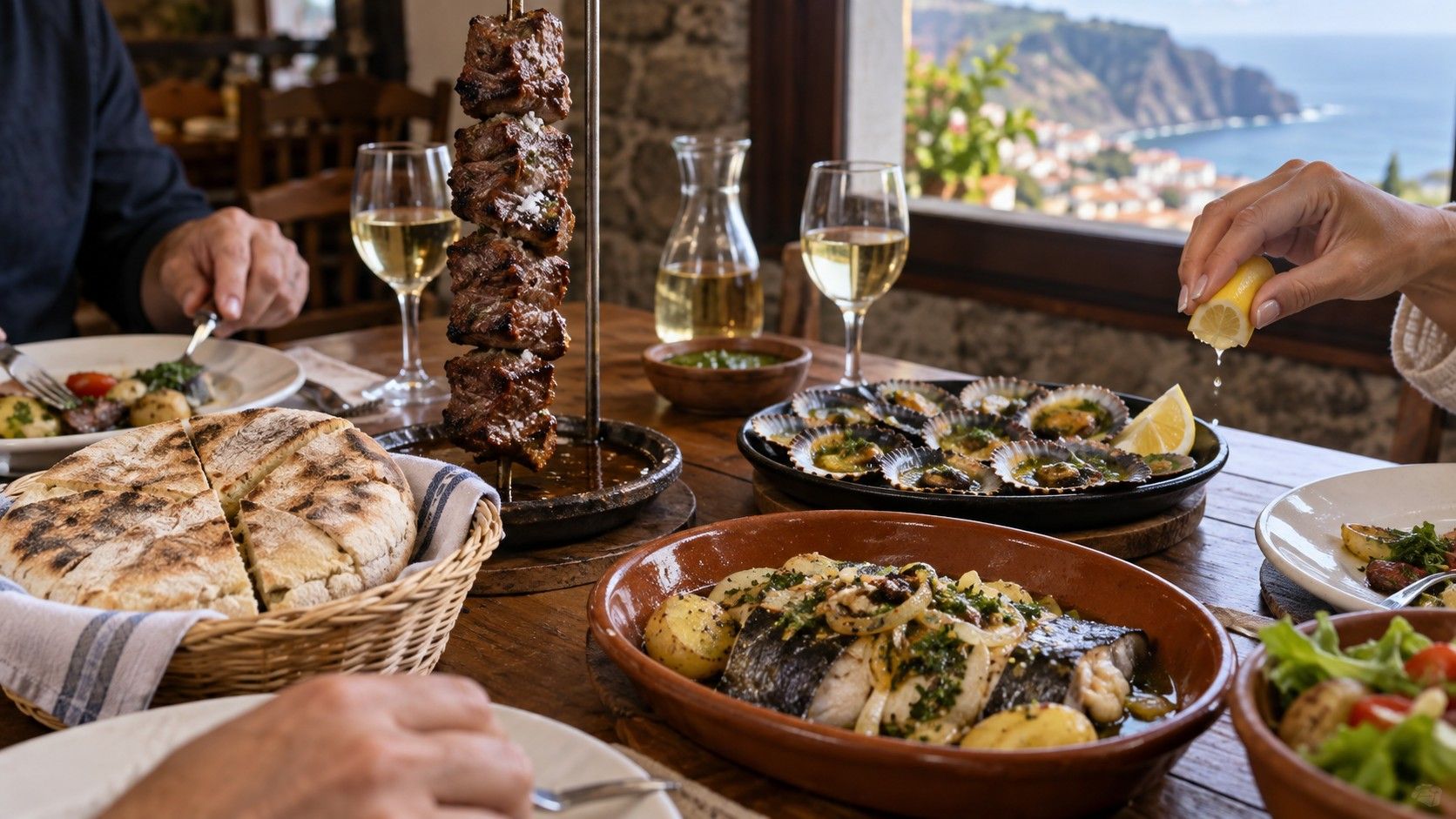
Traditional espetada is beef cut into chunks, seasoned with salt and garlic, often scented with bay, then grilled on a skewer. In dedicated restaurants the skewer may hang from a metal stand so juices fall onto the plate. Good versions depend on meat quality and cooking, not theatrical presentation. Specify doneness if asked, and remember that large cubes can remain pink inside.
Estreito de Câmara de Lobos has a strong espetada tradition and several restaurants built around it. Travelling there can make sense for a meat-focused meal, but good skewers also exist elsewhere. Pairing espetada with milho frito—crisp cubes of cooked maize—and salad gives contrast without ordering every starch. Portions often favour sharing, so one skewer plus sides can be a sensible starting order for two lighter eaters.
Picado is another communal option: small pieces of beef, sometimes pork or chicken, served in sauce and commonly surrounded by chips. It is eaten from a shared platter with picks. The sauce and frying make it heavier than the casual presentation suggests. Carne de vinha d'alhos, pork marinated with wine, garlic and spices, is especially associated with Christmas but appears beyond the festive season. Ask what is house-made rather than building a meal solely from famous names.
| Order | What arrives | Useful check |
|---|---|---|
| Espetada | Grilled beef chunks on a skewer | Size, doneness and included sides |
| Espada | Black scabbardfish fillet | Freshness, preparation and banana pairing |
| Lapas | Limpets cooked in a hot pan | Availability and portion size |
| Bolo do caco | Round flat bread, often with garlic butter | Whether charged as couvert |
| Poncha | Spirit, citrus and honey drink | Strength and house style |
Fish, seafood and the much-debated banana combination
Black scabbardfish, called espada, is a long deep-water fish that looks severe at the market but reaches the plate as a mild white fillet. It is commonly fried or grilled. The familiar espada com banana combines it with fried banana, a sweet-savoury pairing heavily promoted to visitors. Try it if the contrast appeals; choosing a simpler preparation is equally legitimate and can make fish quality easier to judge.
Do not confuse espada with espetada when ordering quickly. One is fish, the other a meat skewer. Ask whether fish is fresh or previously frozen, particularly for species that are not a local daily catch. A displayed whole fish priced by weight should be weighed or its final price clarified before cooking. This prevents surprise when a portion intended for two reaches the bill.
Lapas are limpets, generally served sizzling with garlic, butter and lemon. Their texture is firm and distinctly marine. They are better as a shared starter than a large main for most newcomers. Octopus, tuna and grilled local fish also appear widely. Near fishing areas such as Câmara de Lobos, the setting is atmospheric, but restaurant selection still deserves the usual checks: turnover, transparent pricing and a menu that does not try to cook everything.
Bread, soup, fruit and sweets between larger meals
Bolo do caco is the everyday Madeira item I miss fastest after leaving. Despite the name, it is bread rather than cake, traditionally associated with a hot stone or slab. It appears as a starter, sandwich or side, often split and spread with garlic butter. A prego no bolo do caco adds a thin beef steak and makes a practical lunch. Quality changes with freshness; warm bread with a lightly crisp surface is a different experience from a reheated tourist-menu afterthought.
Sopa de trigo, a substantial wheat soup with vegetables and meat, shows the less photographed side of Madeiran dishes. Tomato and onion soup may arrive with a poached egg. These are useful choices in cooler upland villages or after a wet walk, when another fried plate has little appeal. Portions can be filling enough to alter the rest of an order.
Fruit depends on season. Madeira grows bananas, passion fruit and other subtropical produce, but market stalls sometimes sell novelty hybrids with claims that are difficult to verify. Taste samples, ask the price per kilogram and buy a modest amount first. For sweets, honey cake—bolo de mel—is dense, dark and designed to keep; break pieces by hand if following custom. Queijadas and simple bakery pastries make lighter coffee stops.
Poncha and Madeira wine without losing perspective
Poncha traditionally combines sugar-cane spirit, honey or sugar and citrus. Regional and modern versions use different fruit, and strength varies dramatically. A small glass can contain far more alcohol than its fresh, sweet taste suggests. Try it where it is mixed to order, drink slowly and do not plan to drive. Bars in Câmara de Lobos and Serra de Água have their followers, but the safest tasting place is wherever the driver is not participating.
Madeira wine is fortified and ranges from dry to sweet. Sercial tends toward the dry end, Verdelho medium-dry, Bual richer and Malvasia or Malmsey sweeter, although age and producer style matter. A guided tasting helps because the wine's acidity, oxidation and serving roles are unlike ordinary table wine. Dry styles can work before food; sweeter ones fit dessert or slow sipping.
Nikita, associated with Câmara de Lobos, blends beer with ice cream and often pineapple, producing a drink that is both dessert-like and alcoholic. Brisa soft drinks, local beer and strong espresso offer non-ceremonial alternatives. The useful habit is to count drinks honestly: poncha, wine tasting and a dinner bottle can accumulate across an afternoon even when each serving looks small.
Choosing restaurants and keeping the bill realistic
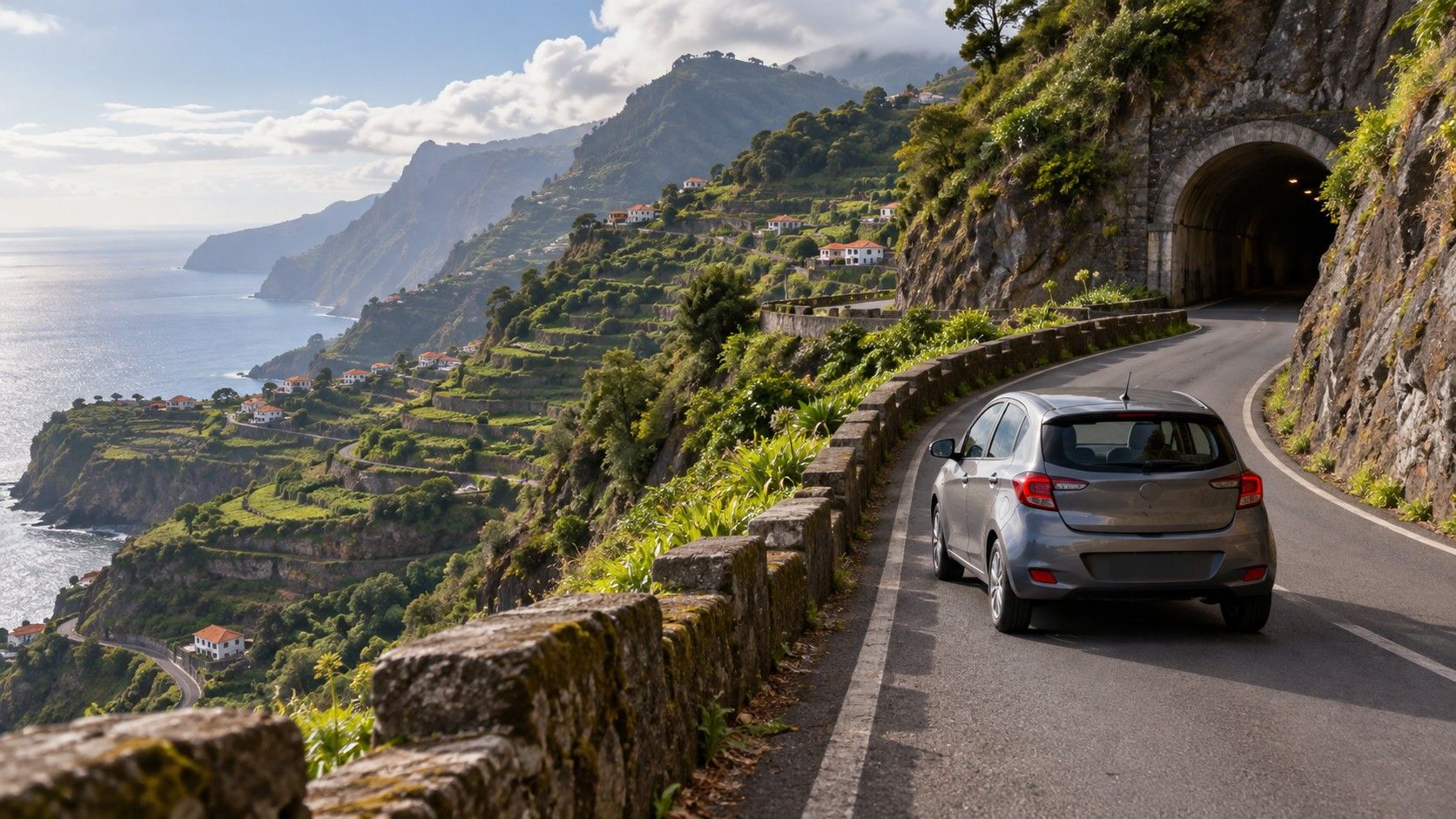
Funchal offers the widest range, from snack bars to polished dining rooms. Prices tend to rise around prime waterfront and hotel-zone locations, though convenience may justify the difference. Outside the capital, traditional restaurants can offer larger portions and lower prices, but a rental-car journey adds fuel, time and a designated driver. A Madeira restaurants guide should acknowledge that the cheapest menu is not always the cheapest evening.
Check whether sides, bread and water are charged, and confirm market-price seafood before ordering. Reservations help for small popular rooms and weekend lunches. Service pace can be relaxed; order a starter only if you want one, not because a long pause creates anxiety. If two dishes sound heavy, share one and add vegetables or soup rather than turning dinner into an endurance event.
The rewarding way to answer what to eat in Madeira is to alternate. Have espetada where grilling is the speciality, fish where the catch and turnover look convincing, soup in the hills, and bolo do caco whenever it arrives genuinely fresh. That approach leaves room for regional food as people eat it, rather than compressing the island into one oversized dinner.