A Madeira itinerary for 7 days fails when it treats the island's short distances as spare time. The map says Funchal to Porto Moniz is modest; the day adds viewpoints, tunnels, parking, weather and one road that deserves attention. A realistic week uses two bases at most, limits each day to one demanding walk or one touring region, and protects a flexible day for cloud on the peaks. This route assumes a rental car, but the same shape can be adapted with tours and trail transfers.
What actually fits into one week
One week in Madeira is enough for Funchal, an east-coast day, one high-mountain day, the north-west and a sample of levada walking. It is not enough to complete every famous hike, swim in every natural pool and eat dinner in six towns without spending the holiday in transit.
The route works best with four or five nights around Funchal and two nights in the north-west, perhaps Porto Moniz or Seixal. Staying in one base is simpler and entirely defensible; changing once saves repeated west-coast driving and reveals a quieter side after excursion vehicles leave. More hotel changes consume the time they appear to save.
Driving times should be treated as minimums. Add parking and at least one unscheduled stop. For hiking days, carry no ambitious evening plan. Wet stone, tunnels and elevation make a four-hour route more tiring than four hours on an urban path. A slow dinner near the accommodation is useful recovery, not wasted itinerary space.
| Day | Main area | Physical load | Weather sensitivity |
|---|---|---|---|
| 1 | Funchal | Light to moderate | Low |
| 2 | Câmara de Lobos and south coast | Light | Low |
| 3 | Ponta de São Lourenço and Machico | Moderate | Wind and sun |
| 4 | Pico do Arieiro area or alternative | High | Very high |
| 5 | Santana and north coast | Moderate | Medium |
| 6 | Porto Moniz and north-west | Light to moderate | Sea conditions |
| 7 | Flexible south-west or missed priority | Flexible | Purposefully flexible |
Days one and two: learn Funchal before chasing the island
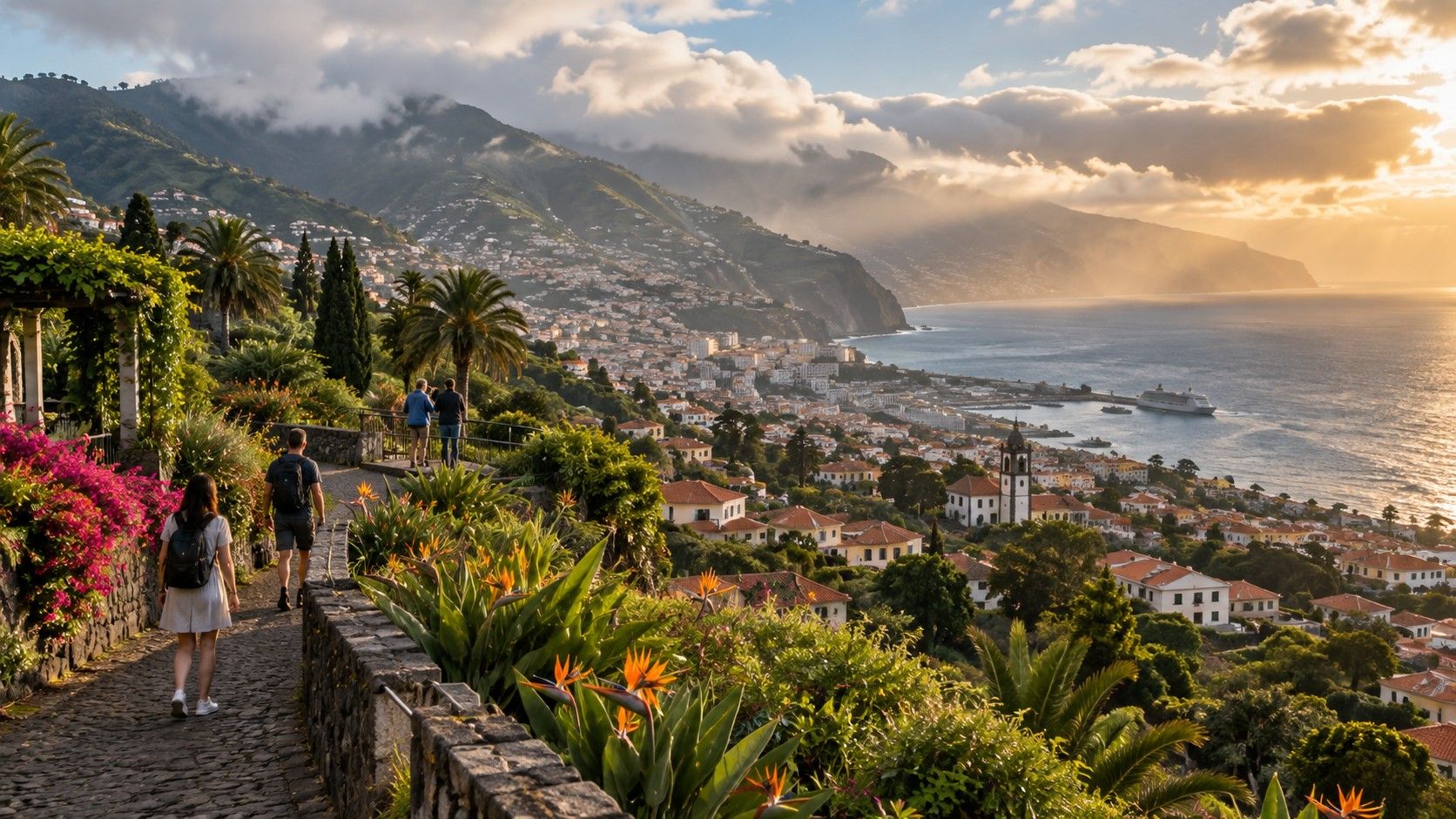
Use day one for central Funchal rather than collecting landmarks at speed. Walk the old town and waterfront, visit the market with realistic expectations—it is lively but visitor-oriented—and choose either the cable car and Monte or a garden, not every attraction above the city. The slopes explain immediately why distances here are deceptive. If arrival is late, save Monte and stay near the centre.
Parking is unnecessary for this day. Leave the rental at the accommodation or collect it the following morning if the rate and logistics allow. Central garages are easier than street hunting, but navigating them adds no value to a walking day. Dinner in town also gives the driver a night without calculating wine against mountain roads.
On day two, take a short loop through Câmara de Lobos and the south-coast viewpoints. The fishing harbour is best before or after the largest tour groups, and an hour is often more satisfying than half a day. Continue toward Cabo Girão if visibility is good, then choose a modest coastal stop or return through the higher roads. Do not cram the entire west into this warm-up day.
This is also the practical shopping day. Buy water, trail food and any missing layer while shops are convenient. Check the latest status for planned walks and look at separate mountain forecasts. The Madeira travel plan becomes much easier when those decisions are made over dinner rather than in a trailhead car park.
Day three: east Madeira without stacking two hard walks
Drive early to Ponta de São Lourenço. The peninsula is exposed, dry by Madeira standards and short on shade, so wind and sun matter more than the temperature shown for Funchal. Take water and turn back if gusts make the exposed sections uncomfortable. Parking pressure builds quickly; an early arrival improves both the walk and the exit.
Afterward, use Machico for lunch and a swim if conditions suit. Its bay offers a gentle contrast to the raw peninsula. Travellers who complete the full walk may be content to stop there. Adding multiple north-coast villages turns a balanced day into a windshield tour.
If the peninsula is closed or wind is severe, substitute a lower walk near Machico, spend more time in Santa Cruz, or move the Funchal day here. This is the first deliberate weather swap. A fixed Madeira road trip itinerary should behave like a deck of cards: regions stay grouped, but individual days move.
Day four: give the high peaks the clearest forecast
Pico do Arieiro belongs on the clearest suitable day, not automatically on Wednesday. Conditions at the summit can be cold, windy and opaque while the coast is bright. Check official trail access, weather and visibility before leaving. Trail closures can affect through-routes, and no itinerary should assume a famous path is fully open.
Arrive early for parking and quieter viewpoints. If undertaking a demanding route, confirm distance, ascent and return transport rather than relying on an old description. The stair sections and repeated elevation changes can surprise walkers who focus only on kilometres. Carry a headlamp for any tunnel route, warm and waterproof layers, and more water than a cloudy start seems to require.
A shorter summit visit can be paired with Ribeiro Frio or a modest forest walk, but only if energy and access remain good. After a strenuous hike, return directly to the base. Knees that feel acceptable in the car often object on Funchal's evening slopes.
When cloud defeats the peaks, use this day for gardens, coastal villages or the south-west, then try the mountain plan on day seven. The mistake is waiting in a summit car park for hours because the schedule says today must be the day.
Days five and six: north coast, Santana and Porto Moniz
Day five crosses toward Santana, with one forest stop chosen according to current access. Traditional houses in the centre are a compact visit, not a full ethnographic experience. The surrounding landscape and north-coast road are the stronger reasons to be here. Lunch in Santana or São Jorge keeps the route coherent.
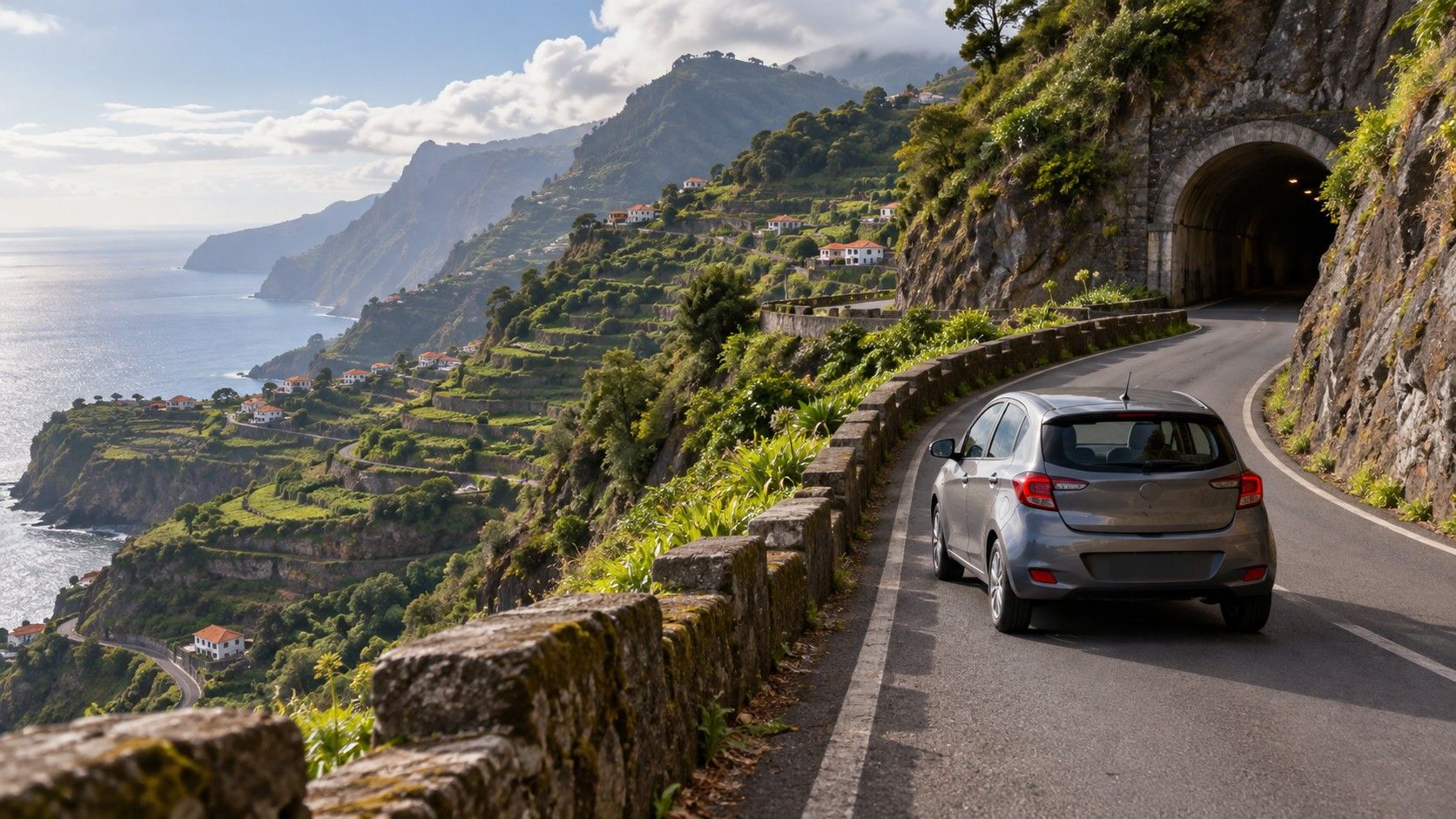
Continue west along the north coast with time for São Vicente. The direct tunnels are efficient; older road segments should be used only when open and clearly permitted. Rockfall closures are not challenges to navigation. If changing base, reach Porto Moniz or Seixal before dark so hotel access and parking do not become the day's final test.
On day six, visit the Porto Moniz natural pools when sea conditions and opening status allow. Arriving before day tours gives a calmer hour, but the Atlantic decides whether swimming is sensible. Use the rest of the day for the north-west: a short coastal viewpoint, Seixal or a nearby forest route. Choose two, not six.
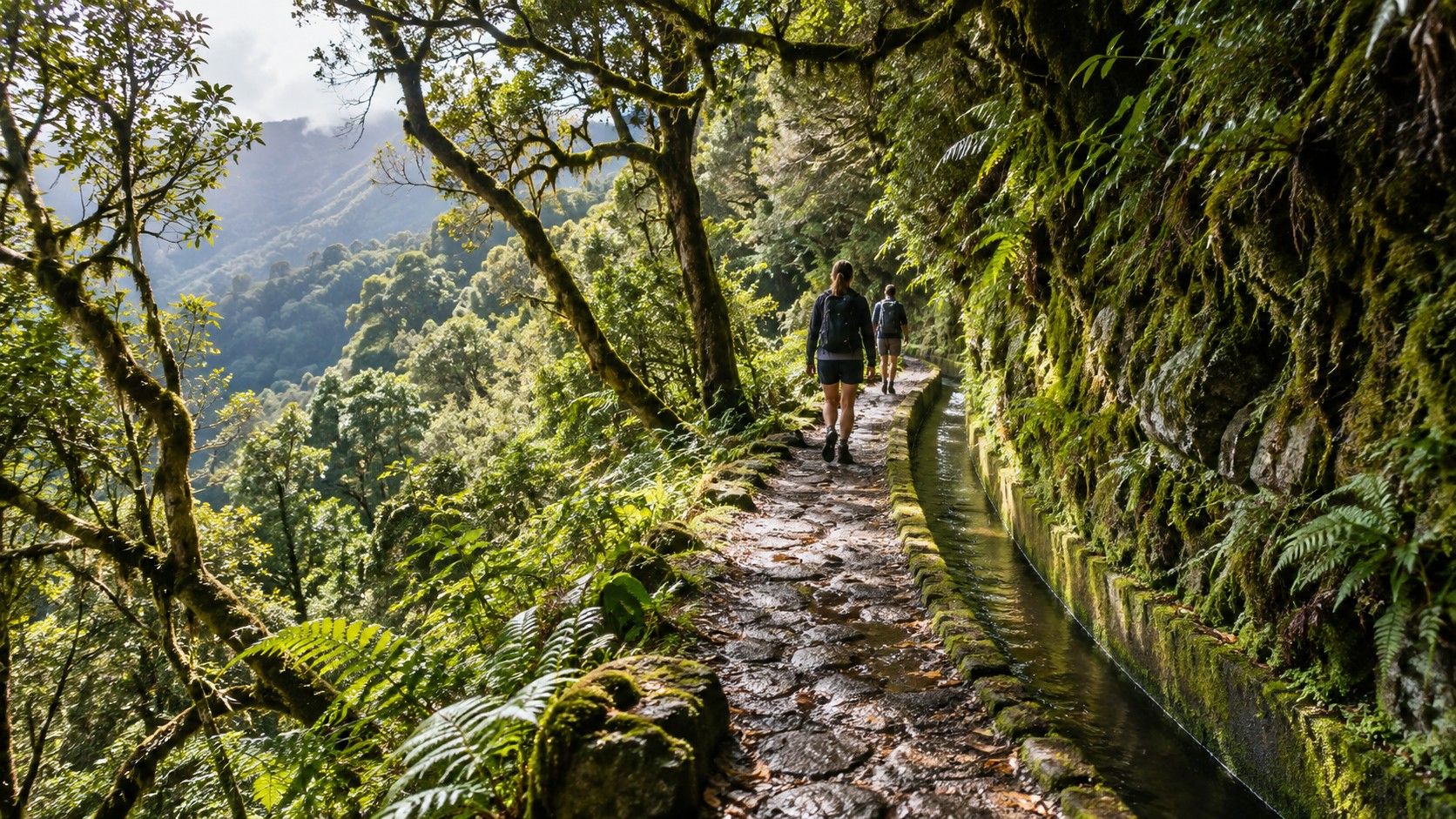
A levada around the Rabaçal area can replace the relaxed touring day, provided official status and weather are favourable. It adds a real hike, shuttle logistics and crowded parking, so it should not be treated as a quick stop between Porto Moniz and sunset elsewhere.
Day seven: west Madeira or the priority the weather stole
The final full day is intentionally uncommitted. If the high peaks were clear earlier, use it for the south-west: Ponta do Pargo, a village lunch and perhaps the warmer coast around Calheta. If a major hike was lost to cloud, move it here and shorten the west loop. If legs are tired, choose Câmara de Lobos, a garden or a long lunch instead of inventing another challenge.
Travellers returning to Funchal should allow for stops without scheduling a tight evening reservation. Those flying the same day need a much smaller plan. Car return, fuel and airport timing make distant north-west sightseeing a poor departure-day gamble.
This flexible day is what makes the preceding six days work. Without it, every patch of mountain cloud becomes a disappointment. With it, the week can absorb one closure, one tired morning or one place that deserves longer than expected.
How to reshuffle without breaking the route
Keep east, west and north activities geographically grouped. Swap complete days rather than driving from Porto Moniz to an eastern trail because one afternoon looks sunny. Coastal sightseeing is the dependable fallback for ridge cloud; Funchal is the fallback for widespread rain; a levada is not automatically safe merely because it sits below the summits.
Check trail notices each morning, then hourly wind, rain and cloud for the specific elevation. Keep footwear and waterproofs in the car, but do not leave valuables visible. Reserve only the activities that truly require a slot, such as a transfer or guided walk, and leave ordinary sightseeing loose.
The best Madeira itinerary for 7 days is not the one that covers the most pins. It is the one in which the driver remains alert, the walking days have recovery space, and the clearest mountain window is actually used. Seven days can feel generous when the route respects terrain; it feels rushed when every tunnel exit becomes another obligation.