A useful Madeira packing list is not a suitcase full of emergency gear. It is a small set of layers that can handle warm Funchal, spray on the north coast and a cold cloud crossing a ridge on the same day. Pack for elevation and activity rather than the temperature icon on one forecast, and the island becomes much easier to dress for.
Pack for the altitude you will visit, not one coastal forecast
Madeira's weather reports often describe the coast, where winter afternoons can feel mild and summer heat is tempered by the Atlantic. Pico do Arieiro, Paul da Serra and high trailheads are a different system. Temperature falls with elevation, wind has little shelter on exposed ridges, and cloud can turn sun into damp visibility within minutes. A 22°C morning in Funchal does not promise a warm mountain walk.
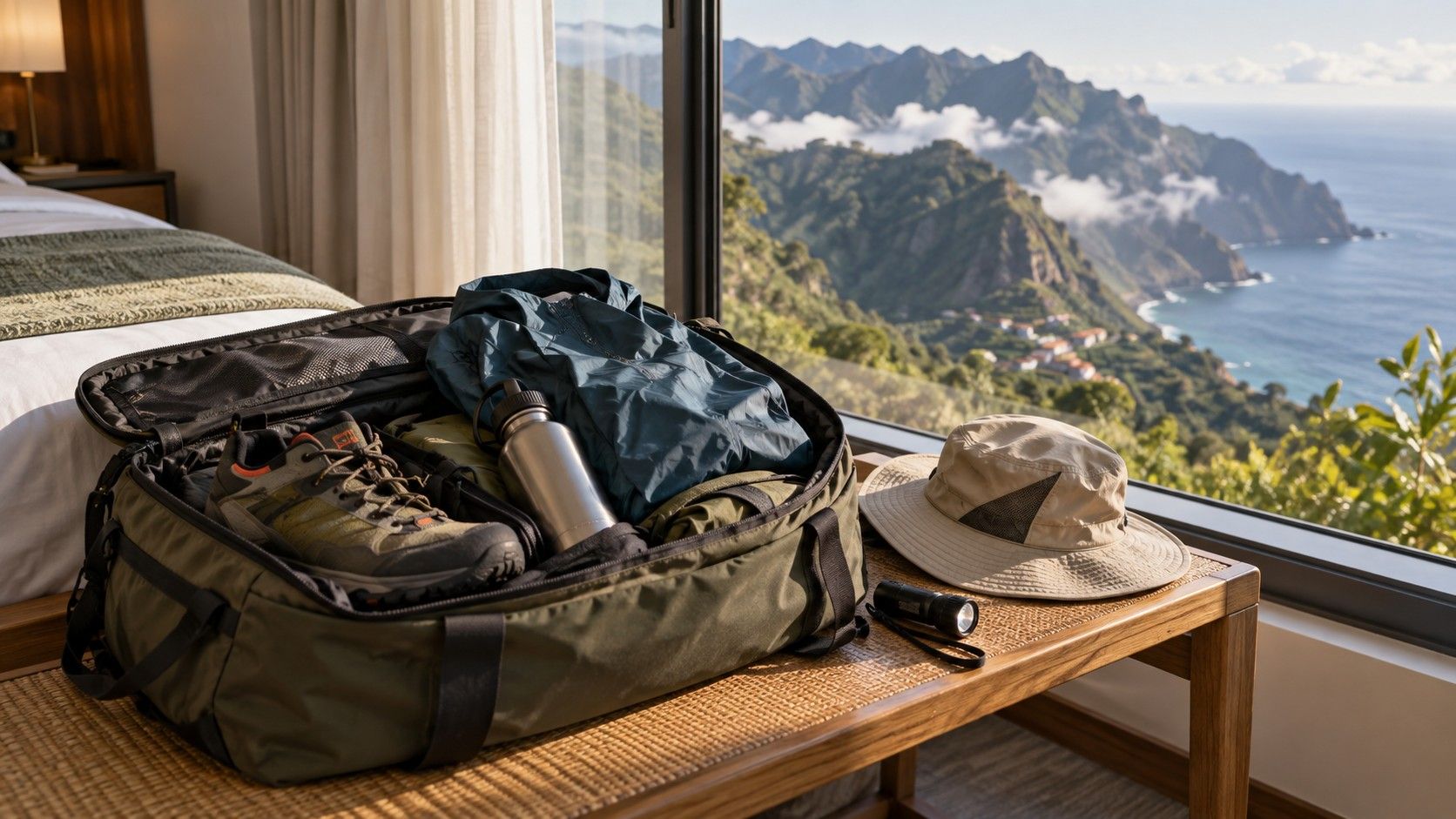
The practical answer is three light layers: a breathable base, a thin insulating layer and a compact waterproof shell. Each item should work independently. A bulky winter coat is awkward in town and too hot once a climb begins; a light fleece or merino mid-layer is easier to remove and fits into a daypack. In summer, many visitors will carry the insulation more than wear it, but it earns its space at a windy viewpoint or before sunrise.
Check separate forecasts for the south coast, north coast and mountain zone before leaving each day. Webcams can reveal whether peaks are above the cloud, though conditions can change after you set out. My rule is simple: if the itinerary includes a high trail, the shell and warm layer go in the bag even when breakfast is outdoors in sunshine.
| Plan | Wear or carry | Easy mistake |
|---|---|---|
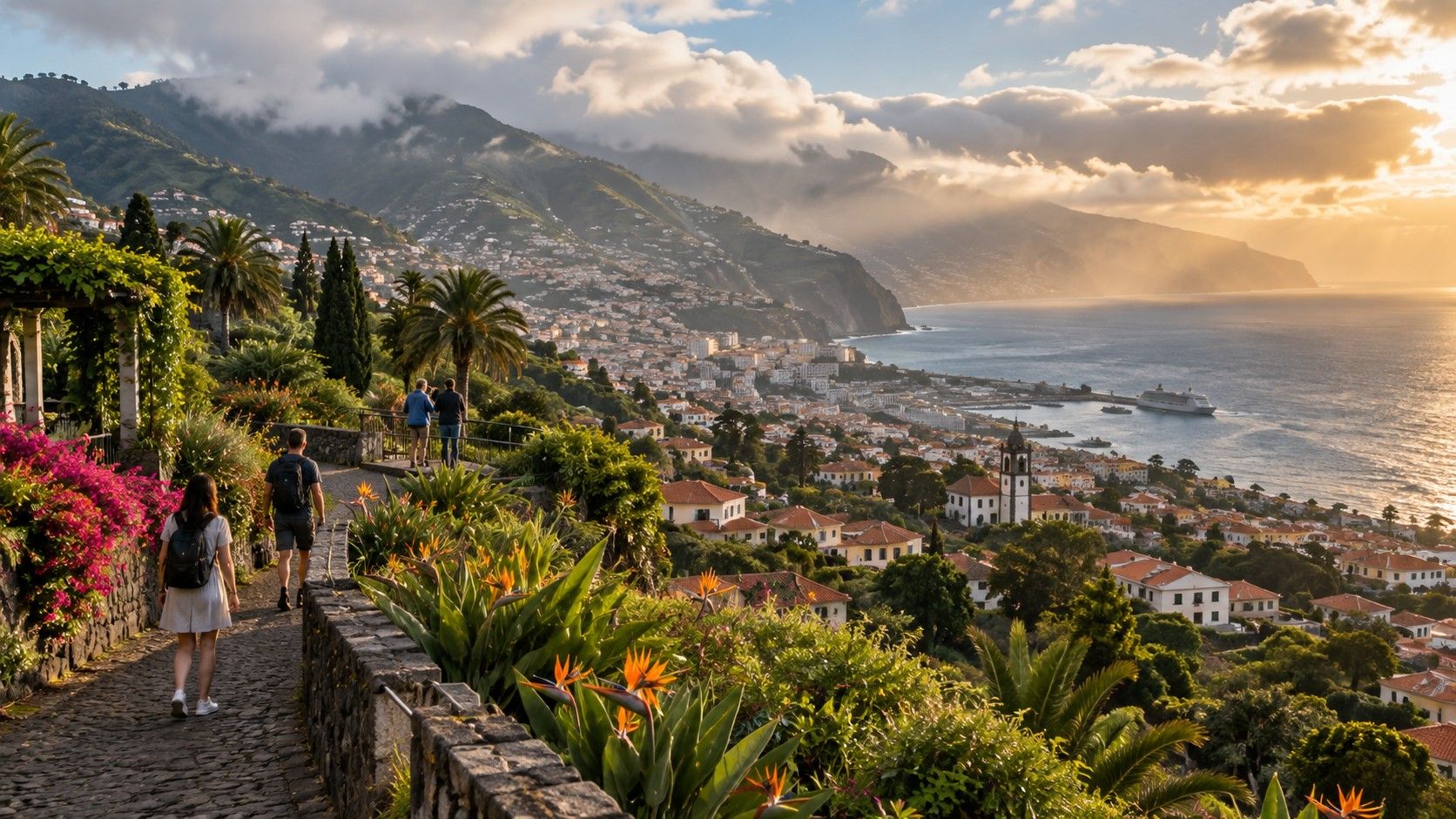
| Funchal and coastal towns | Light clothes, comfortable shoes, sun layer | Ignoring steep polished streets |
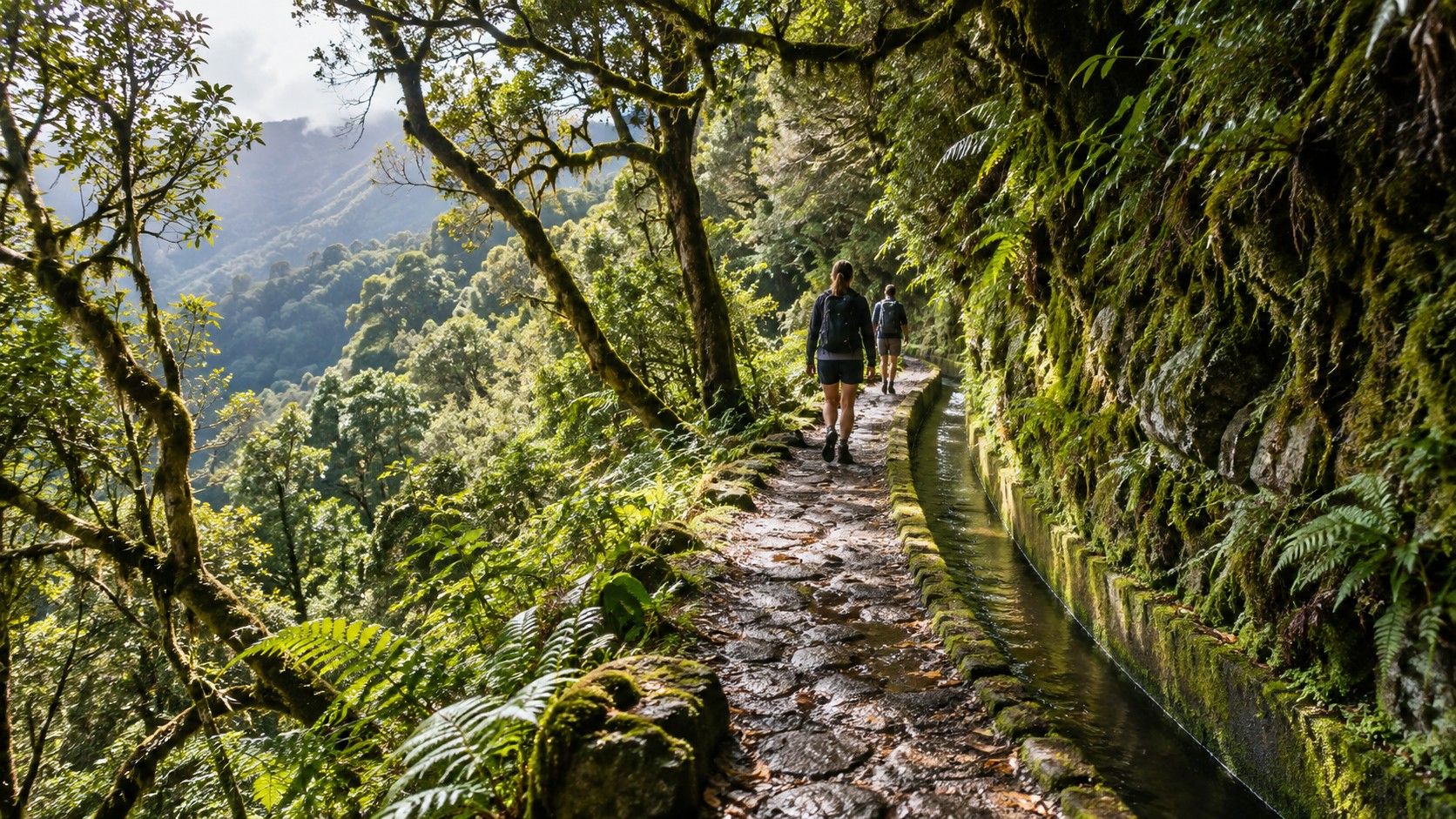
| Levada walk | Trail shoes, shell, light, small daypack | Assuming a flat channel means dry footing |
| Mountain peak | Layers, windproof shell, water, sun protection | Dressing for the hotel forecast |
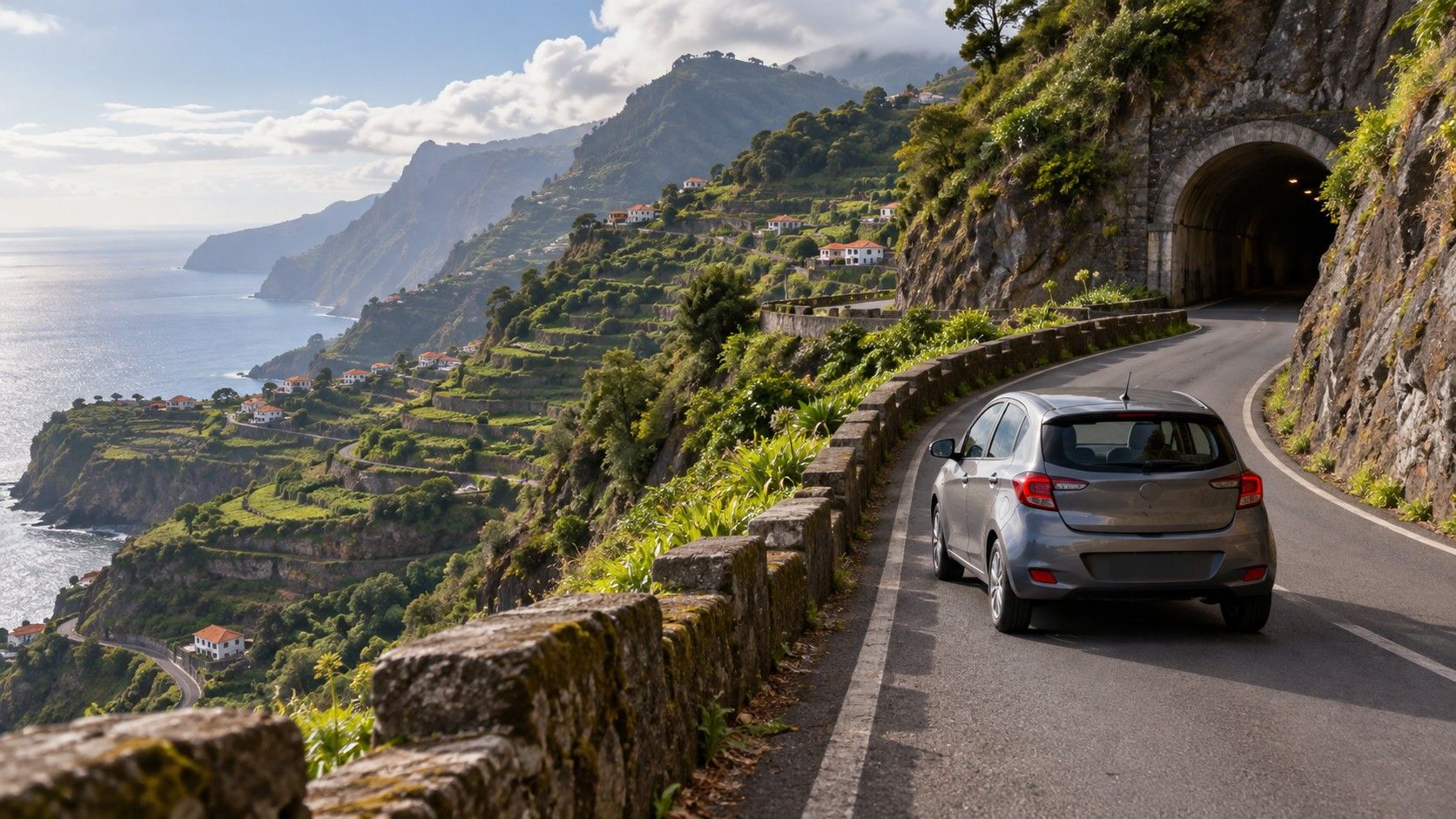
| North-coast drive | Quick-dry layer and rain shell | Leaving gear in distant accommodation |
What to wear in Funchal and coastal towns
For ordinary days, pack the clothes you would use in a mild Atlantic city: breathable shirts, shorts or light trousers, and one smarter casual outfit if you enjoy dinner in town. Restaurants are generally relaxed. Swimwear needs a cover-up for moving between a lido and the street, and a quick-dry towel is useful at natural pools where rentals are not guaranteed.
Footwear matters more than formality. Funchal has steep pavements, patterned stone and surfaces that become slick after rain. Thin, flat soles may look suitable for a city break but become tiring on repeated climbs. A supportive trainer with reliable grip handles the centre, gardens and cable-car areas without advertising itself as hiking equipment. Sandals are pleasant by the water, yet I would not make them the only everyday pair.
Laundry is a better strategy than packing fourteen outfits. Quick-dry fabrics cope with humidity and allow a small wardrobe to rotate. Include a light overshirt or cardigan for air-conditioned interiors and breezy evenings. Madeira is not consistently tropical; exposed restaurant terraces can feel cool after sunset, particularly outside midsummer.
Footwear for levadas, forest paths and peaks
Levada walking sounds gentle because many routes follow a water channel, but surfaces vary from firm paths to mud, wet rock, roots and narrow ledges. Trail shoes with tread are sufficient for many maintained routes. Mid-height boots add ankle coverage and help in persistent wet conditions, though they are not mandatory for every visitor. The best choice is footwear already broken in, not a rigid new boot first worn on holiday.
For exposed routes such as mountain traverses, prioritise grip and a stable fit. Carry blister treatment and a spare pair of socks; wet feet turn a manageable walk into an unpleasant return. Gaiters are optional rather than essential, while trekking poles can help on long descents if you normally use them. They should never be treated as a substitute for balance on narrow paths.
Pack a separate bag for muddy shoes if you will use buses, taxis or a rental car. A shower cap or reusable dry bag does the job without consuming space. After a wet levada, loosen insoles and let footwear dry naturally. Madeira hiking clothes should also be quick-drying: heavy cotton holds sweat and drizzle exactly when a breeze arrives.
Rain, wind and sun protection that earns its place
A rain shell should be genuinely waterproof, have a hood that stays put and leave room for the mid-layer. A flimsy poncho catches on vegetation and performs badly in ridge wind, though it can work for a short urban shower. Waterproof trousers are worthwhile for walkers planning full days in uncertain weather; casual visitors can use quick-dry trousers and accept an occasional damp hem.
Sun protection belongs in the bag even under cloud. Madeira's latitude, open ocean light and elevation can produce a burn before the air feels hot. Pack high-factor sunscreen, sunglasses and a hat that will not immediately leave in the wind. Reapply after swimming and during long walks. A small amount carried on the trail is more useful than a large bottle left in the hotel bathroom.
Protect electronics from both rain and condensation. A simple inner dry bag keeps a phone, documents and spare layer safe when the pack cover leaks around shoulder straps. If photography is important, bring a lens cloth; spray at Porto Moniz and mist in laurel forest mark glass quickly. A foldable umbrella is useful in Funchal but not reliable equipment for a mountain route.
Small items that solve Madeira-specific problems
A headlamp or compact torch is essential for levada routes with tunnels. A phone light occupies one hand, drains the battery and is poor at showing uneven ground. Check the planned route because tunnel length varies, and carry the light where it can be reached before the entrance. A spare battery or power bank is sensible when navigation and transport tickets depend on the same phone.
Bring a reusable water bottle and a daypack comfortable enough for layers. Water availability varies, and levada water should not be assumed safe to drink. A basic first-aid pouch needs blister care, personal medication and any motion-sickness remedy you use; winding roads affect some passengers. European plug adapters are required for travellers whose devices use other standards, while a multi-port charger reduces the hunt for sockets.
For swimming, water shoes are optional but useful on pebbles and rough pool edges. Pack a waterproof pouch only if it has been tested; dramatic marketing labels are not evidence that it can be submerged. A small tote handles groceries and damp kit. Keep one change of essentials in hand luggage because an island flight and checked bag do not always arrive together.
Adjusting the list by season and trip style
Summer packing can stay light, but do not remove the shell, walking layer or closed shoes if mountains are planned. Winter needs an additional warm layer and more attention to waterproofing, not necessarily a heavy city coat. Spring and autumn are the hardest to reduce to a formula: build a flexible capsule and decide each morning what moves from suitcase to daypack.
A resort-based trip requires less technical kit than five levada days. Conversely, serious walkers should check route-specific equipment, closures and guide advice rather than relying on a general holiday list. Leave room for the thing Madeira makes everyone carry: a layer removed halfway through the day. The most successful packing is not the most comprehensive; it is the kit you can comfortably keep with you when the coast and peaks choose different weather.