Madeira can support a careful mid-range trip, but a single daily average hides the decisions that move the total. Accommodation season, rental-car insurance and restaurant habits matter far more than the price of a coffee. Build a Madeira holiday budget in separate blocks, keep a buffer for weather-driven changes, and the question “is Madeira expensive?” becomes something you can answer for your own itinerary.
The costs that actually shape a Madeira trip
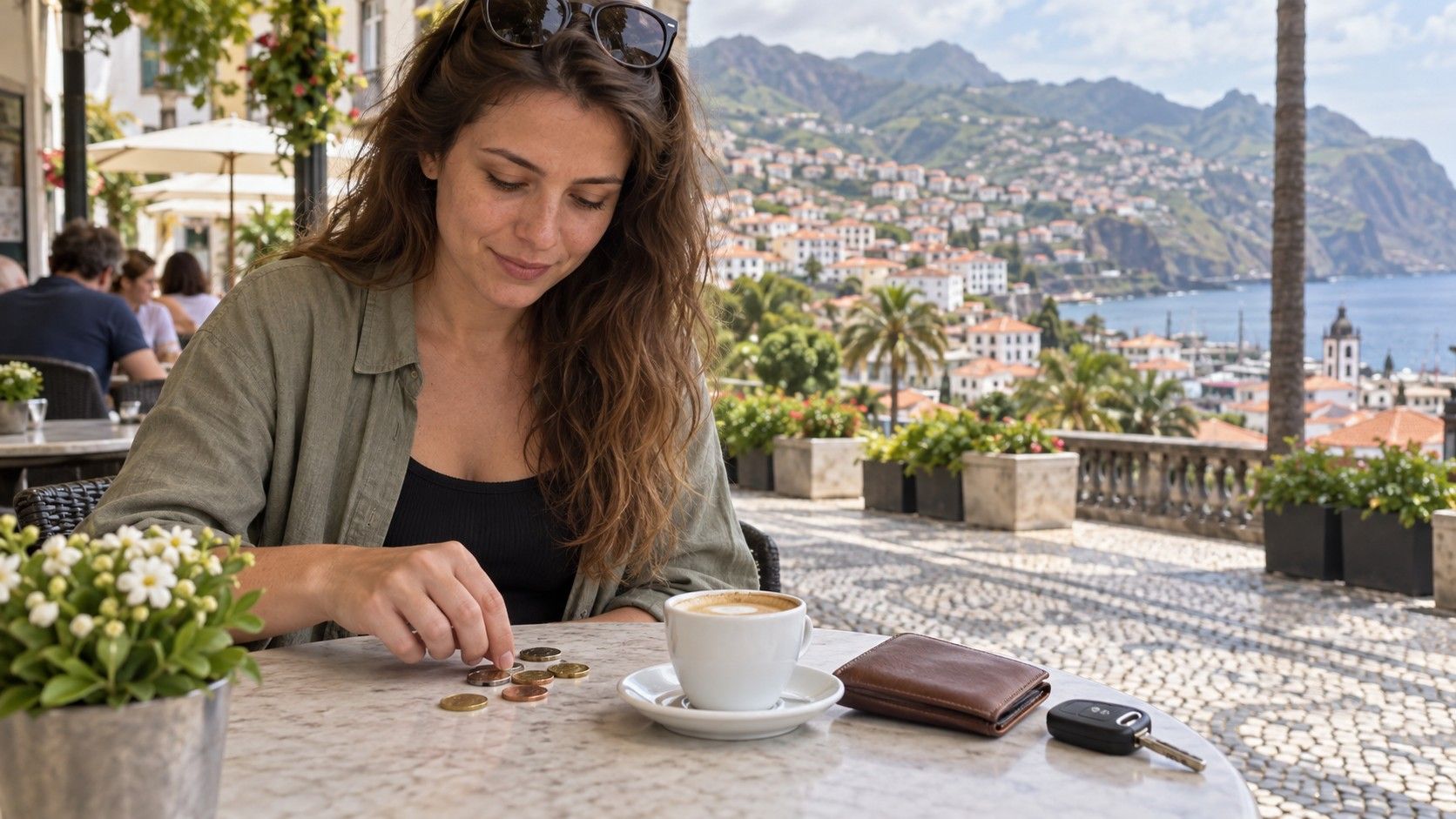
Flights and accommodation usually dominate the total, followed by transport if you rent a car. Food can remain moderate because supermarkets, bakeries and lunch specials are widely available. Many viewpoints and town walks cost nothing, while guided canyoning, boat trips and private transfers raise an otherwise quiet day quickly. The island is priced in euro, and card payment is common, but some buses, small cafés and parking situations still make cash useful.
Separate fixed costs from daily spending. Fixed costs include flights, lodging, insurance and a rental booking. Daily costs include meals, fuel, parking, admissions and drinks. Then create a third line for selected experiences. This prevents a €70 boat trip from distorting every day's estimate and stops “free hiking” from concealing the price of a taxi to a remote trailhead.
Prices change by date and supplier, so use ranges as planning tools rather than promises. Holiday periods, New Year events and summer demand can lift rooms and cars sharply. Book cancellable options early, then compare again before the free-cancellation deadline. A realistic buffer of 10 to 15 percent covers a changed route, extra meal or bad-weather alternative without turning each purchase into a calculation.
Accommodation: area and season matter more than star count
Funchal has the broadest supply: hostels and simple guesthouses, apartments, businesslike hotels and large properties around the Lido. Central lodging can reduce transport spending because restaurants, buses and sights are walkable. A cheaper hillside apartment may require taxis or a car and test anyone carrying groceries uphill. Compare the final address, parking and cleaning fees—not only the nightly headline.
Outside Funchal, places such as Machico, Ponta do Sol, Calheta, São Vicente and Porto Moniz offer different trade-offs. Rates may be attractive, and evenings can feel quieter, but transport becomes more important. An apartment with a kitchen saves money only if you genuinely prepare meals. A hotel breakfast can be good value for early hiking days, while an expensive buffet is wasted by travellers who want only coffee.
As a broad planning range, two people might find modest rooms from roughly €60–€100 in softer periods, comfortable mid-range options around €100–€180, and substantially higher rates for resort or peak-date stays. These figures can be exceeded, especially around major events, and solo travellers bear the room cost alone. Check taxes, breakfast, parking, cancellation and whether the quoted price is for the entire stay.
Food and drink without turning every meal into a splurge
A bakery breakfast or simple café stop can remain under €10 per person, while a casual lunch might land around €10–€18. A sit-down dinner with a main course and drink commonly moves into the €20–€35 range per person; seafood, premium meat and wine push it further. Portions are sometimes generous, so asking about sides and sharing a starter can reduce both cost and waste.
Supermarkets make picnic lunches practical, particularly on driving days. Buy water, fruit, bread and sandwich ingredients before heading into remote areas where choice shrinks. Markets are enjoyable but not automatically cheap; confirm per-kilogram prices for fruit. Bolo do caco, soup and a prego sandwich are useful lower-cost meals rather than consolation prizes.
Restaurant bills grow through extras: couvert bread, sides sold separately, bottled water, dessert, poncha and coffee. None is ruinous alone. Together they can double a modest main course. Decide which extras matter instead of reflexively accepting all of them. For a couple mixing groceries, cafés and one restaurant meal, €50–€90 per day is a workable food-planning band, with more allowed for seafood or wine-focused evenings.
| Style | Lodging for two | Food for two | Transport and activities | Indicative daily total |
|---|---|---|---|---|
| Careful | €60–€90 | €35–€55 | €15–€35 | €110–€180 |
| Mid-range | €100–€170 | €60–€100 | €35–€80 | €195–€350 |
| Comfort-led | €180+ | €110+ | €80+ | €370+ |
These totals exclude flights and are not quotations. A rental car may be charged weekly rather than neatly by day, and an expensive tour may occur once. Use the rows to test assumptions, then price the actual travel dates.
Rental cars, buses, fuel and the parking line people forget
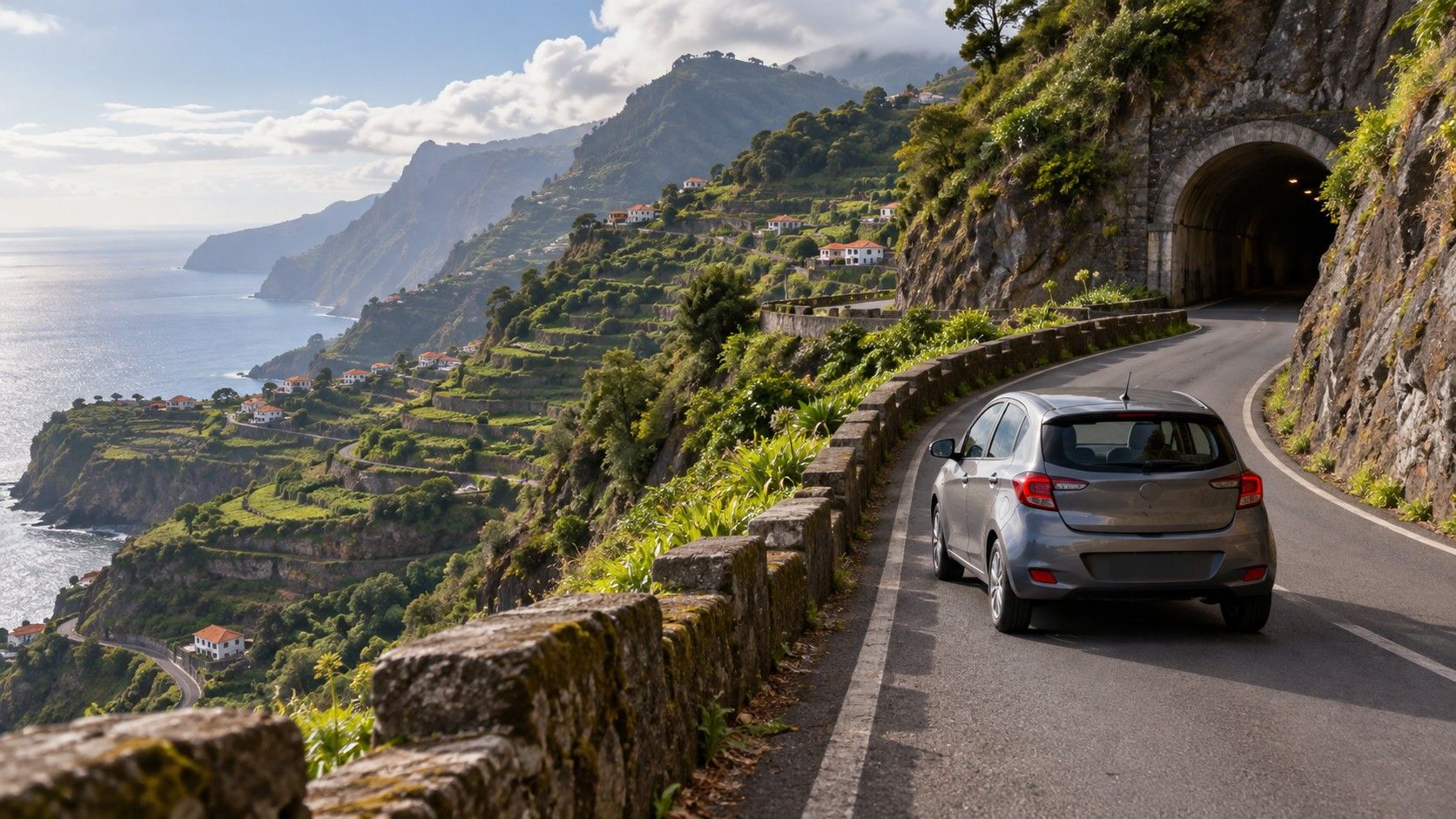
Car rental prices are volatile. A small manual may appear inexpensive in low demand, but automatic transmission, airport fees, an additional driver and reduced-excess insurance change the final bill. The cheapest prepaid rate can carry a large deposit or strict fuel terms. Read the excess, tyre and glass coverage, late collection rule and cancellation terms before treating it as a bargain.
Fuel distances are modest, yet Madeira's gradients and repeated island crossings consume more than a flat-city estimate suggests. Add paid garages in Funchal and occasional attraction parking. Accommodation with included parking has real value if the alternative is a nightly garage or a stressful search on steep streets. Photograph the vehicle at collection and allow time to refuel before return.
Without a car, urban and intercity buses keep basic travel inexpensive, but networks are operated by different companies and schedules do not serve every hike well. A low bus fare is not useful if the last return departs before a walk finishes. Trail transfers, taxis and guided minibuses fill gaps. Compare the total for two people: several transfers can approach the cost of a short rental, while a car for one central Funchal week may sit unused.
Hikes, tours and days that cost almost nothing
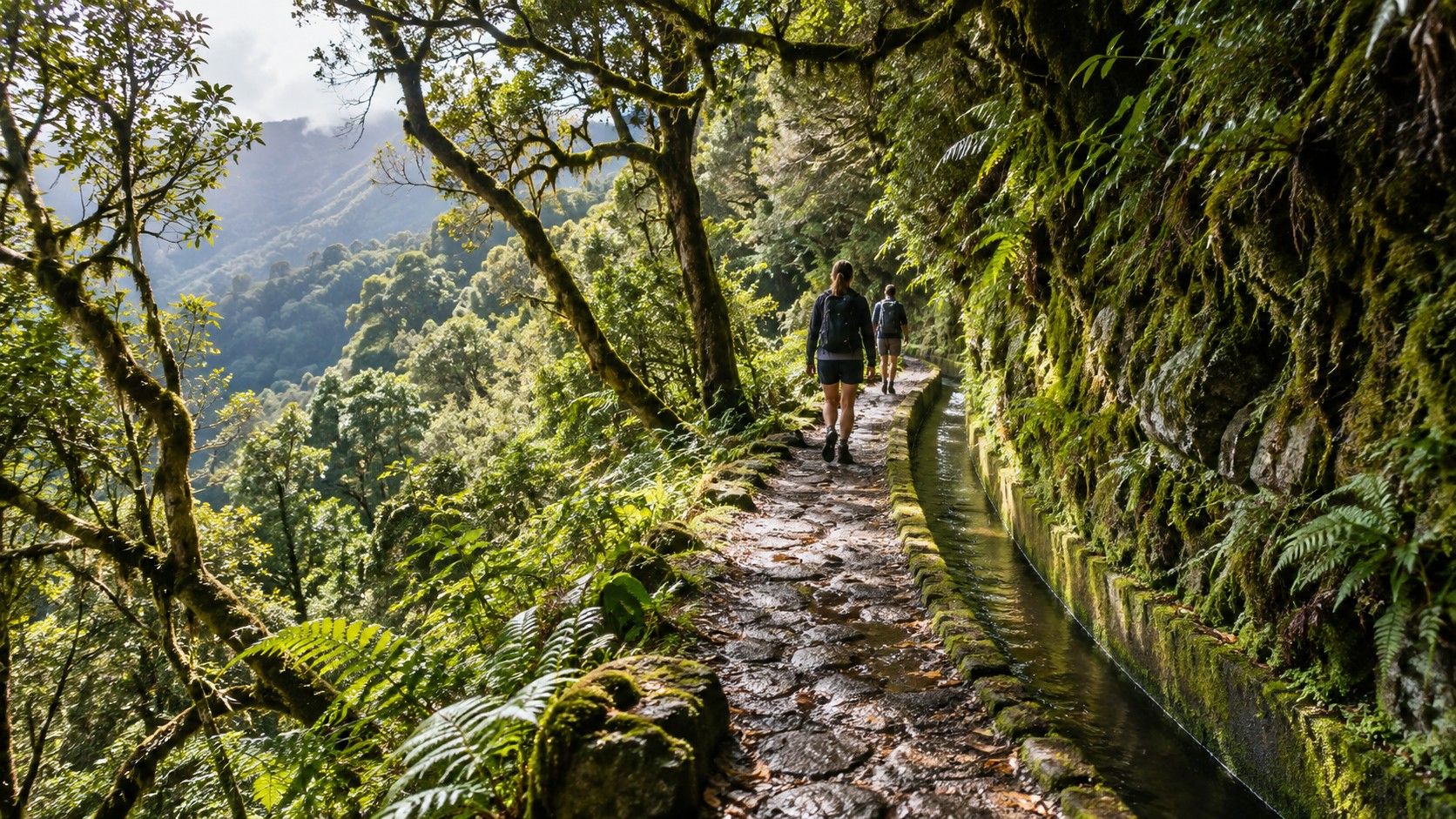
Many coastal walks, viewpoints and town explorations remain free, but popular classified walking routes may have access fees or booking arrangements that change. Check official current requirements and closures before departure. Paid parking, a trail shuttle or taxi can make a “free” hike a €20–€60 day for two. That is still good value when the transport solves a one-way route safely.
Guided levada walks commonly bundle transport and local knowledge, useful for visitors who do not want to drive or navigate variable conditions. Boat trips, canyoning, diving and private tours belong in the experience budget. Choose two or three priorities rather than booking an activity every day. Madeira rewards unscheduled time: Funchal gardens, a public promenade, a village lunch and a coastal sunset do not need a tour operator.
Weather deserves its own financial buffer. Mountain cloud can move a planned hike to another day, and rough seas can cancel a boat trip. Prefer providers with clear cancellation policies. Keep one flexible paid indoor option and several low-cost alternatives instead of buying replacements in frustration.
Three ways to build a realistic daily budget
A careful couple can stay in a simple room, use buses, buy breakfast and picnic food, then choose one casual restaurant meal. Outside peak periods, a target near €120–€180 per day for two excluding flights can be possible, but it requires deliberate lodging and transport choices. Solo costs do not halve because the room and many taxis remain nearly the same.
A mid-range couple in a comfortable hotel or apartment, alternating a rental car with paid parking, eating out regularly and adding selected tours should plan roughly €200–€350 per day. The range is wide because a €120 room and a €170 room are both plausibly mid-range on different dates. Price lodging and car first, then place the remainder around them.
A comfort-led trip with a resort, automatic car, frequent taxis, restaurant dinners and private experiences can exceed €370 per day for two without effort. That does not make Madeira uniformly costly; it shows that convenience is the expensive product. The sound answer to Madeira travel cost is a dated spreadsheet with actual reservations, flexible daily allowances and one honest contingency line.