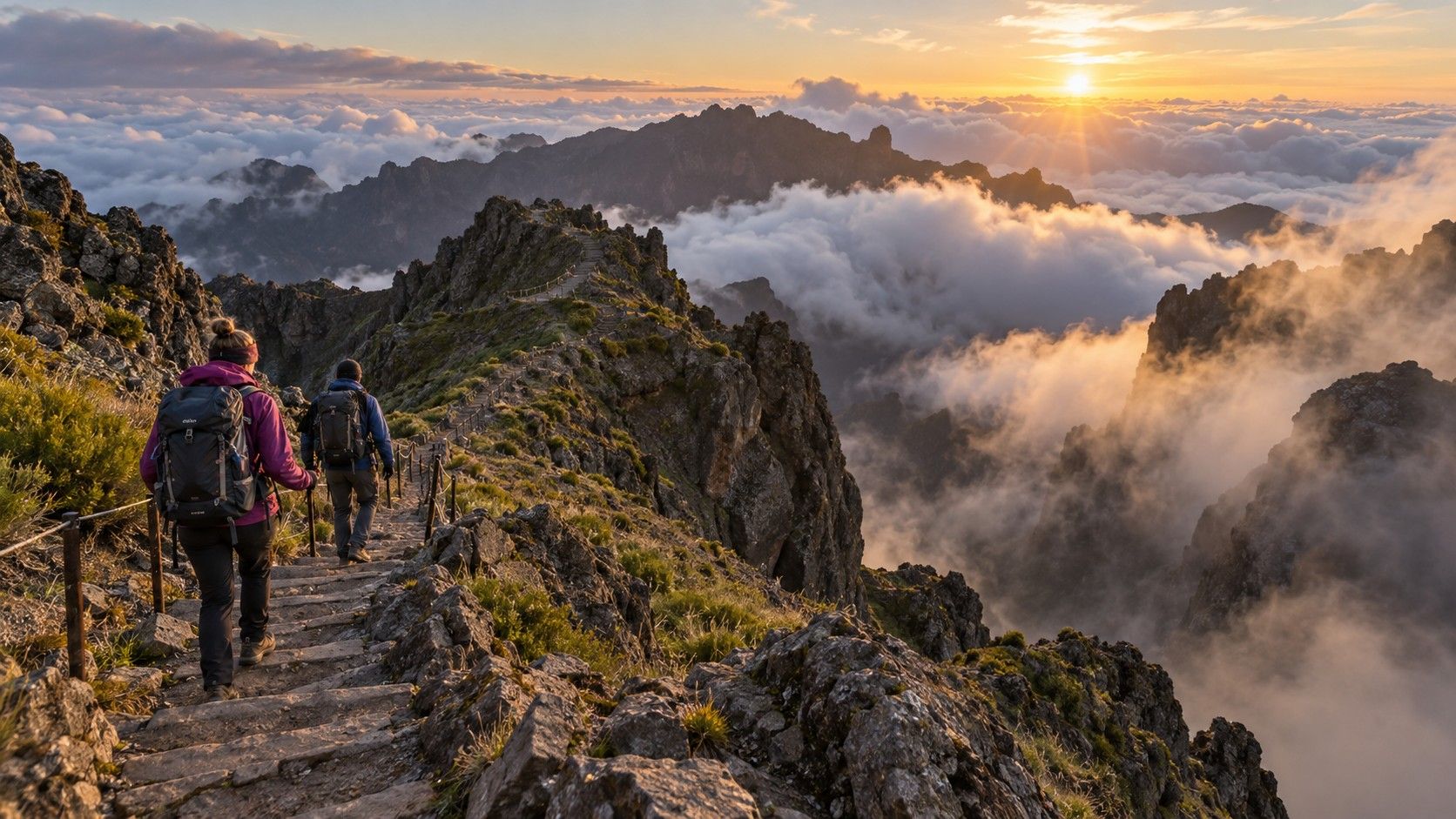
The famous ridge above the clouds is only one version of a Pico do Arieiro hike. On another morning the summit car park sits inside wet fog, the wind pushes people sideways, or a barrier closes the trail beyond the viewpoint. A useful plan therefore begins with current access and a transport decision, not with a sunrise photograph. PR1 Madeira is a serious mountain route whose conditions, open sections and return options can change faster than most holiday itineraries.
Why the route can change at short notice
PR1 links Pico do Arieiro with Pico Ruivo through steep staircases, tunnels and narrow traverses. Rockfall, fire damage, maintenance and exposed weather can close all or part of it. A viewpoint remaining open does not mean the through-hike is open. Read the official trail status on the evening before the walk and again before departure, and pay attention to the exact section named. A locked gate is not an invitation to improvise around the ridge.
Cloud cover deserves the same respect as a formal notice. Funchal may be dry while the mountains are in dense mist, and a webcam image from half an hour ago can already be obsolete. Wind is the condition I take most seriously: it makes the exposed steps tiring, chills damp clothing and turns an easy photo stop into an awkward balance exercise. If visibility is poor, the route loses both its main appeal and much of the visual information that helps with safe footing.
Build a flexible morning into the itinerary rather than making the Pico do Arieiro to Pico Ruivo crossing the non-negotiable centre of the trip. Keeping one spare weather window is more effective than booking every day tightly. When a closure is announced, accept it early and switch routes; mountain rescue should not become the backup transport plan for a schedule that ignored a barrier.
Getting there before and after sunrise
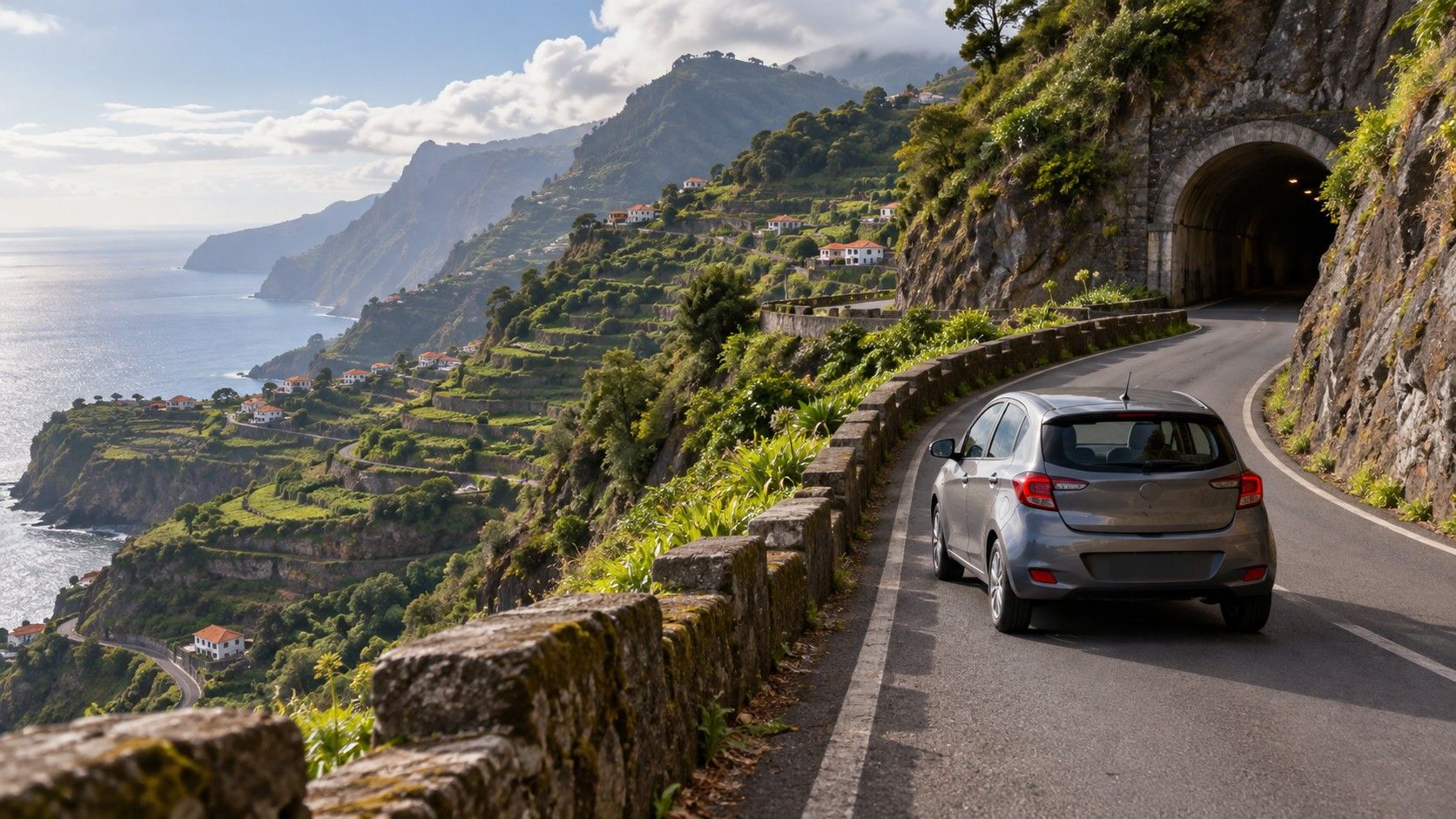
The summit road climbs quickly from the south coast and ends near the radar station. Driving looks simple on a map, but the final approach can be dark, busy and lined with parked vehicles. Arrive with enough time to walk from the actual parking place, not the place you hope to find. At Pico do Arieiro sunrise, headlights, people changing clothes beside cars and hurried pedestrians all share a confined area. Slow down and expect the closest spaces to be unavailable.
A sunrise shuttle removes the parking problem but creates a timetable problem. Check whether the booking is a return transfer to the same summit, a one-way drop for a through-hike, or a pickup at Achada do Teixeira. These are different products. If PR1 closes after a one-way transfer has been arranged, confirm how the operator handles the change. Save the driver's contact and the pickup location offline because reception is not equally reliable along the ridge.
For a full crossing, return transport needs to be settled before the first step. Pico Ruivo is not beside a road; the usual exit descends to Achada do Teixeira, followed by a transfer back toward the south. A taxi arranged vaguely for “later” is a weak plan when hiking times vary. Agree on a meeting point and a realistic time range, and keep enough battery to communicate. An out-and-back from Pico do Arieiro is simpler logistically, but every descent on the outward leg becomes a climb on the return.
What the trail demands physically
The numbers alone understate PR1. Repeated stone and metal stairs break any comfortable rhythm, tunnels force a change in posture, and short steep climbs arrive after the legs already feel worked. People who walk long distances on flat ground can still find the elevation changes surprisingly hard. Allow generous time, especially if stopping for photographs or moving cautiously on damp steps.
Carry water from the start. There is no dependable refill along the exposed central section, and cool wind can disguise how much fluid you are losing. A small head torch is useful in the tunnels even if a phone has a light; it keeps both hands free and protects the phone battery needed for maps and transport. Shoes should have reliable tread. Smooth fashion trainers are particularly unpleasant on dusty descents and wet stone.
| Plan | Best for | Main complication |
|---|---|---|
| Summit viewpoints only | Short visit or uncertain weather | Busy parking around sunrise |
| Out and back on an open section | Flexible hikers with one vehicle | Return climbing is easy to underestimate |
| Through-hike to Achada do Teixeira | Fit hikers with confirmed access | Requires reliable return transport |
Turnaround discipline matters. Choose a time before setting off, then reassess when you reach it. The ridge encourages “just one more viewpoint” decisions, yet the effort of returning is hidden by the terrain already crossed. Fatigue also reduces patience around slower walkers on narrow sections. Giving people space is safer than trying to overtake at the first possible gap.
Weather and exposed sections
Mountain weather is not simply a colder version of coastal weather. Sun, cloud and wind can alternate within minutes. I carry a light waterproof layer even when the road out of Funchal begins under blue sky, plus a warm layer that can be removed without unpacking everything. Cotton becomes uncomfortable after a sweaty climb followed by a windy pause. Sun protection is still necessary above cloud, where the light can be harsh despite cool air.
On exposed traverses, put the phone away before moving. Stop at a wider point for photographs rather than walking while filming. Keep behind railings and avoid loose edges; volcanic ground can crumble without warning. In tunnels, wait for oncoming hikers where there is room instead of squeezing past in the darkest section. After rain, treat painted or metal surfaces as slippery even if the surrounding rock looks dry.
If cloud removes visibility, use a downloaded map and retrace the marked route rather than following silhouettes. Groups separate easily when faster walkers move ahead through a tunnel or around a bend. Agree beforehand that everyone waits at junctions. A person who is cold, dizzy or unusually slow should not be pressured onward because transport is waiting. Call for appropriate help early if a genuine emergency develops, but ordinary tiredness is better prevented with pace, food and an honest turnaround.
Safer alternatives when PR1 is closed
Achada do Teixeira offers the most direct alternative high-mountain walk. The route to Pico Ruivo approaches from the north-east and avoids the technical rhythm of the full ridge, although it still involves sustained climbing, mountain weather and exposed stretches. It is often the sensible choice for someone whose priority is reaching Madeira's highest summit rather than completing a particular trail number. Access and trail status still need checking.
A short visit around Pico do Arieiro can also be worthwhile when only the main path is restricted. The summit viewpoints give a clear sense of the central massif on a good day, and leaving after an hour is not a failed hike. Pair it with a lower walk where cloud is less entrenched. Madeira's elevation bands often allow a useful second plan: wet grey mountains can coexist with brighter conditions nearer the coast.
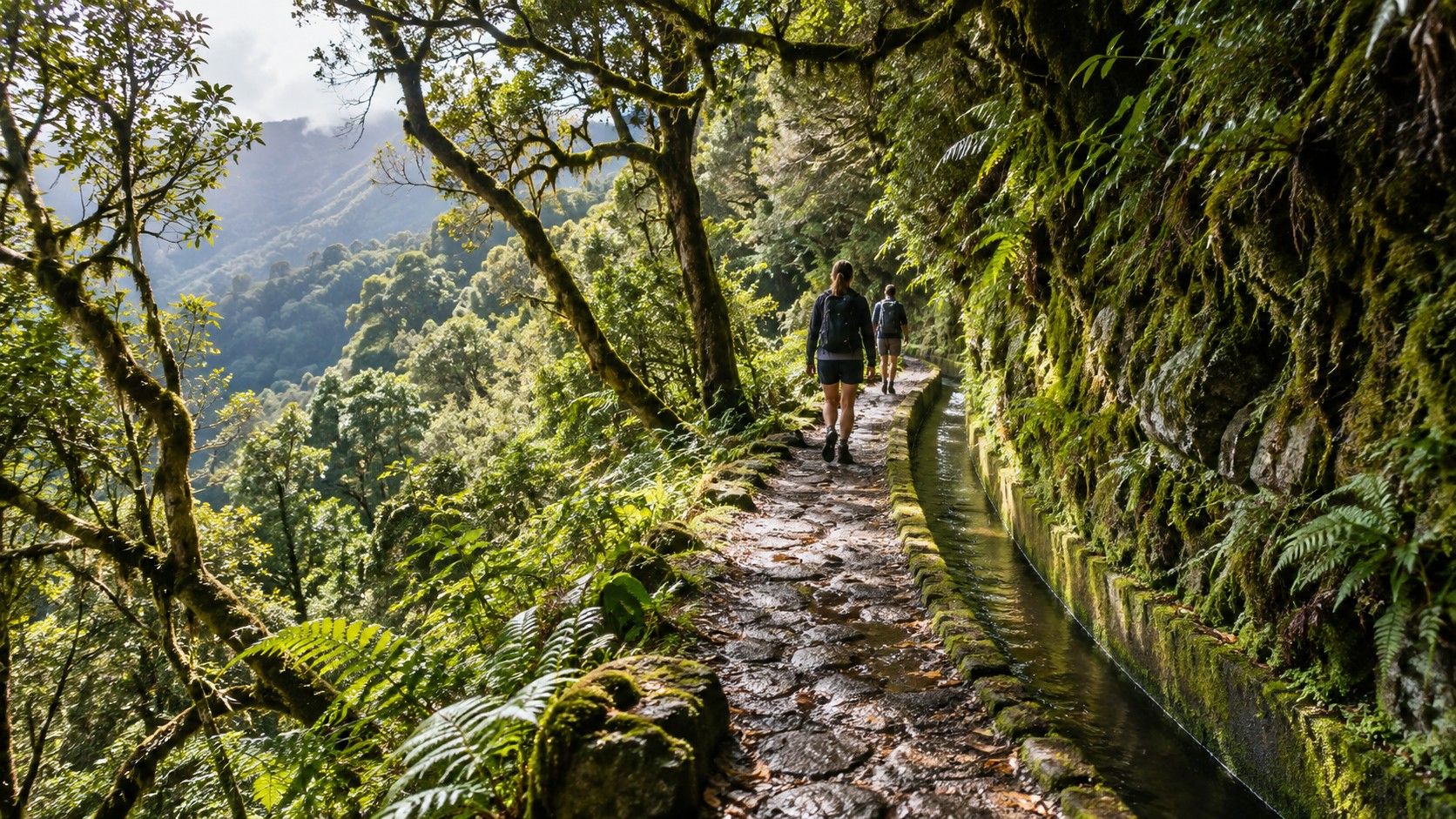
Do not automatically substitute another exposed ridge when strong wind caused the first cancellation. A levada walk in sheltered forest, a route near Ribeiro Frio, or a coastal day may fit the conditions better. The correct alternative responds to the reason for the closure. A good Pico do Arieiro plan is not measured by stubbornly reaching a summit; it is measured by coming home with enough energy to enjoy the rest of the island.