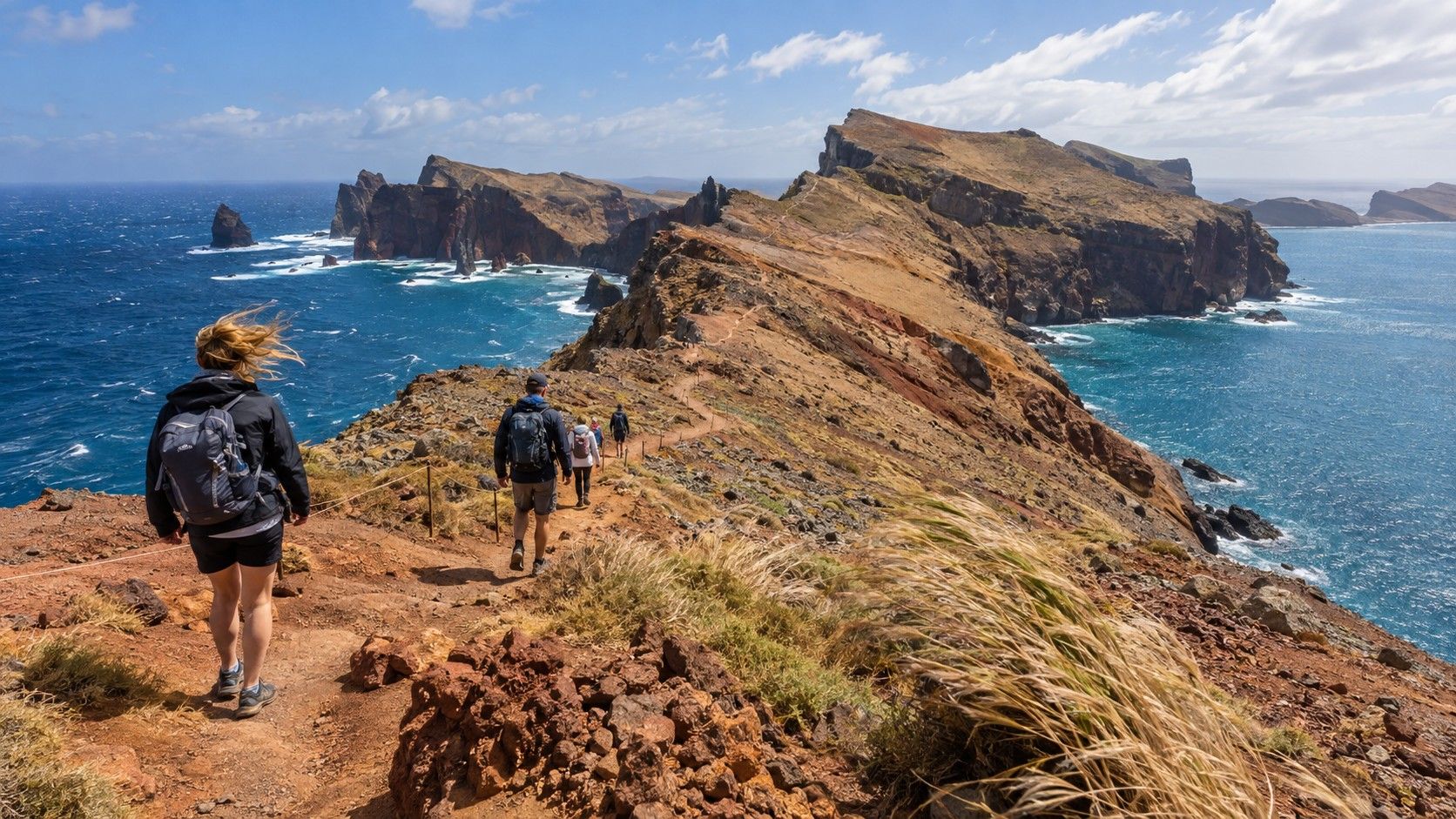
The Ponta de São Lourenço hike looks easier than Madeira's mountain routes because its ridges are lower and almost treeless. That openness creates the main difficulties: there is little shade, wind crosses the peninsula without warning, and every descent must be climbed again on the return. PR8 Madeira is a clearly defined out-and-back walk, but a comfortable day still depends on start time, water and an honest reading of the weather.
Why this walk feels unlike the rest of Madeira
Ponta de São Lourenço extends from the island's dry eastern end, where rust, ochre and dark volcanic rock replace the dense green associated with levadas. The sea appears on both sides at several points, and the route repeatedly reveals headlands that were hidden minutes earlier. The landscape is exposed rather than technically alpine. That distinction matters: low elevation does not mean low risk when the sun and wind work together.
The official PR8 route begins at Baía d'Abra and follows maintained paths, stone steps and ridges toward Casa do Sardinha. Erosion can lead to temporary diversions or closures, so check current trail status rather than copying an old GPS line around a barrier. Stay on the marked path. Shortcuts scar fragile ground and often lead onto loose slopes with no useful time saving.
Allow more time than the distance suggests. Photo stops, opposing foot traffic and the return climbs interrupt a steady pace. The outward walk creates a false sense of progress because each new viewpoint feels close; the same undulations are more tiring after lunch. For many walkers, a relaxed half day is a better frame than squeezing the Madeira peninsula walk between airport transfers or a fixed restaurant booking.
Choose car or bus access before the morning rush
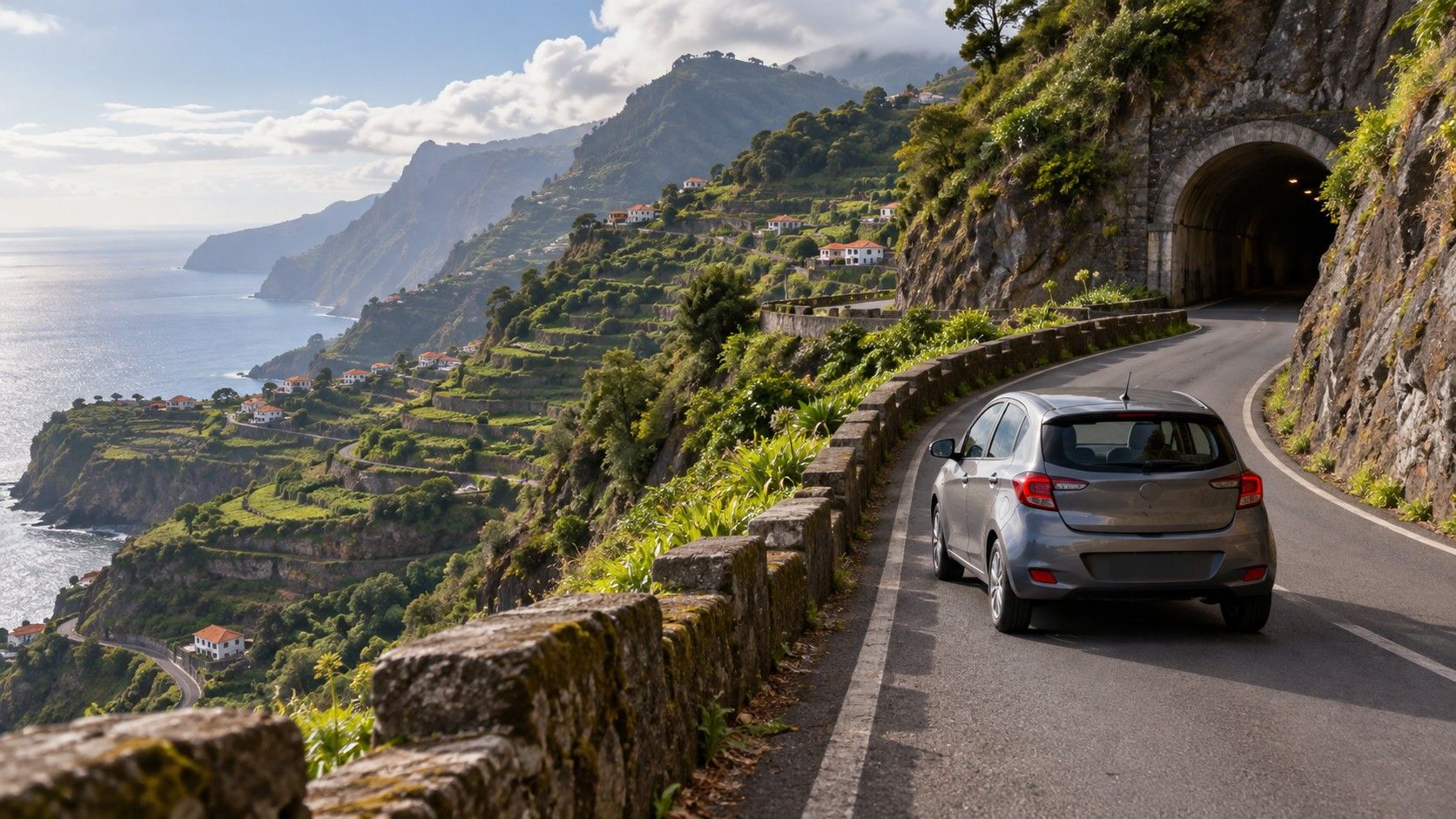
By car, the road ends at the Baía d'Abra trailhead. The nearest spaces fill early, and later arrivals may park progressively farther back along permitted roadside areas. Do not block turning points or narrow the road for buses. Photograph the car's location if the line of parked vehicles is long; after several hours, one bend looks remarkably similar to another.
Bus access makes the walk possible without a hire car, but the timetable controls the day. Confirm the current service to Baía d'Abra, the return times and whether the schedule changes on weekends or holidays. Arrive at the stop early because a full bus can complicate a carefully timed plan. Download the timetable and route before leaving accommodation instead of depending on reception at the trailhead.
| Access | Useful when | Watch for |
|---|---|---|
| Hire car | You want an early start and flexible return | Parking distance and roadside restrictions |
| Public bus | You are based in Machico or Funchal without a car | Limited return departures |
| Taxi or transfer | A small group values a direct journey | Arrange pickup because taxis may not wait |
A taxi is simple on the outward trip but should not be assumed available for an immediate return. Agree whether the driver will collect you or save a local contact. The trail is an out-and-back, so there is no need for a transfer between different endpoints. That makes logistics easier than PR1, provided nobody mistakes the café area for a road exit.
Manage heat, wind and exposed terrain
Start early in warm months. Shade is scarce until Casa do Sardinha, and reflected light from pale ground adds to the exposure. Carry enough water for the return rather than expecting a guaranteed refill or open café. A hat with a secure strap is more useful than one repeatedly caught by gusts. Sunscreen should cover ears, neck and the backs of hands, areas easily missed in a coastal breeze.
Wind forecasts deserve attention, but conditions vary along the trail. A calm car park can lead to strong crosswinds on a narrow ridge. Slow down, keep both hands free and stop before taking photographs. If a gust makes stable walking difficult, turning around is reasonable. Railings reduce some exposure but are not a promise that every section suits every condition.
The trail surface alternates between compact earth, stone steps and loose volcanic material. Shoes with tread make descents more controlled. After rain, mud and polished rock can be slippery; after long dry periods, dust reduces grip. Walking poles may help on climbs but can become awkward in crowded narrow sections, so fold or carry them when they obstruct others.
There is no advantage in racing past slower hikers where the path pinches. Wait for a wider place, announce the pass and avoid stepping onto vegetation. Groups should agree on a turnaround time, especially if travelling by bus. The exposed route makes dehydration and heat fatigue gradual; a headache or unusual irritability is a better cue to rest than the distance remaining on an app.
Walk to Casa do Sardinha without treating it as the finish line
Casa do Sardinha provides a sheltered reference point near the far part of the standard route. Facilities and sales should be treated as variable, not as the basis of the water plan. Use the area to sit, eat and reassess the wind. The surrounding palms offer a contrast to the bare ridges, and the pause can prevent the common mistake of starting the return immediately after arriving breathless.
An additional steep climb above the house is often what people remember as the final viewpoint. It is optional and should be judged separately from reaching Casa do Sardinha. The surface is loose and the ascent is exposed. If legs are already tired or gusts are strong, the lower viewpoints still provide a complete experience. A summit pin is not worth turning a manageable return into a struggle.
Remember that the route back is not flat. Short climbs accumulate, and the broad views that distracted attention outward may be behind you. Keep water and a snack for this half. If travelling with children, place the most patient adult at the rear and build in stops before complaints become exhaustion. The trail has drops and rough ground, so a pushchair is not an appropriate solution.
Treat swimming as an optional extension
People sometimes combine the hike with a swim near the peninsula. Access, sea state and seasonal services change, and a spot visible below the path may not have a safe or permitted approach. Use only established access, read signs and watch the water. The eastern coast can be windy even when the bay appears protected.
Carry separate dry clothing if swimming matters. Hiking in damp clothes invites chafing on the return, while leaving bags unattended creates another problem. If a boat service or café is operating, confirm the last departure and what the fare includes before relying on it. None of these services should replace the ability to walk back to Baía d'Abra.
On rough days, skip the water and use the saved time for a relaxed meal in Caniçal or Machico. The Ponta de São Lourenço hike is already a substantial coastal experience. Adding a marginal swim because it appeared in someone else's itinerary can turn a good walk into a cold, rushed afternoon.
Combine the trail with Canical or Machico
Caniçal is the closest practical town for lunch and provides a different view of Madeira's relationship with the sea. Its waterfront and restaurants work well after the dry peninsula, and the whale museum can be a purposeful indoor stop if weather shortens the hike. Check hours before building the day around it. Parking and restaurant demand rise around lunch, so flexibility helps.
Machico offers a broader beach, a walkable centre and more services. It is useful for bus travellers and for anyone staying near the airport. A gentle seafront walk can loosen tired legs, but a second steep viewpoint is rarely necessary after PR8. Choose a meal, beach time or a town stroll rather than adding another full checklist.
If the hike ends early because of heat or wind, these towns make the day feel complete without pretending conditions were suitable. They also provide water, shade and a chance to reassess driving energy. Avoid scheduling a tight airport check-in after the trail: parking delays, buses and slower-than-expected walking leave little margin.
The São Lourenço trail works best when its simplicity is respected. Begin early, bring water from the outset, keep services optional and turn around before conditions dictate the decision. The peninsula does not require technical mountaineering, but it does reward the same habits as a mountain walk: preparation, attention and enough humility to change the plan.