Funchal rewards a slower plan than its compact centre suggests. The map makes the waterfront, Zona Velha and lower cable-car station look comfortably close, but Monte is a different outing and the city's steep streets quietly add fatigue. This two-day Funchal itinerary keeps the first day walkable and the second flexible enough for gardens, changing weather and the occasional attraction that closes earlier than expected.
Build the first day around the lower city
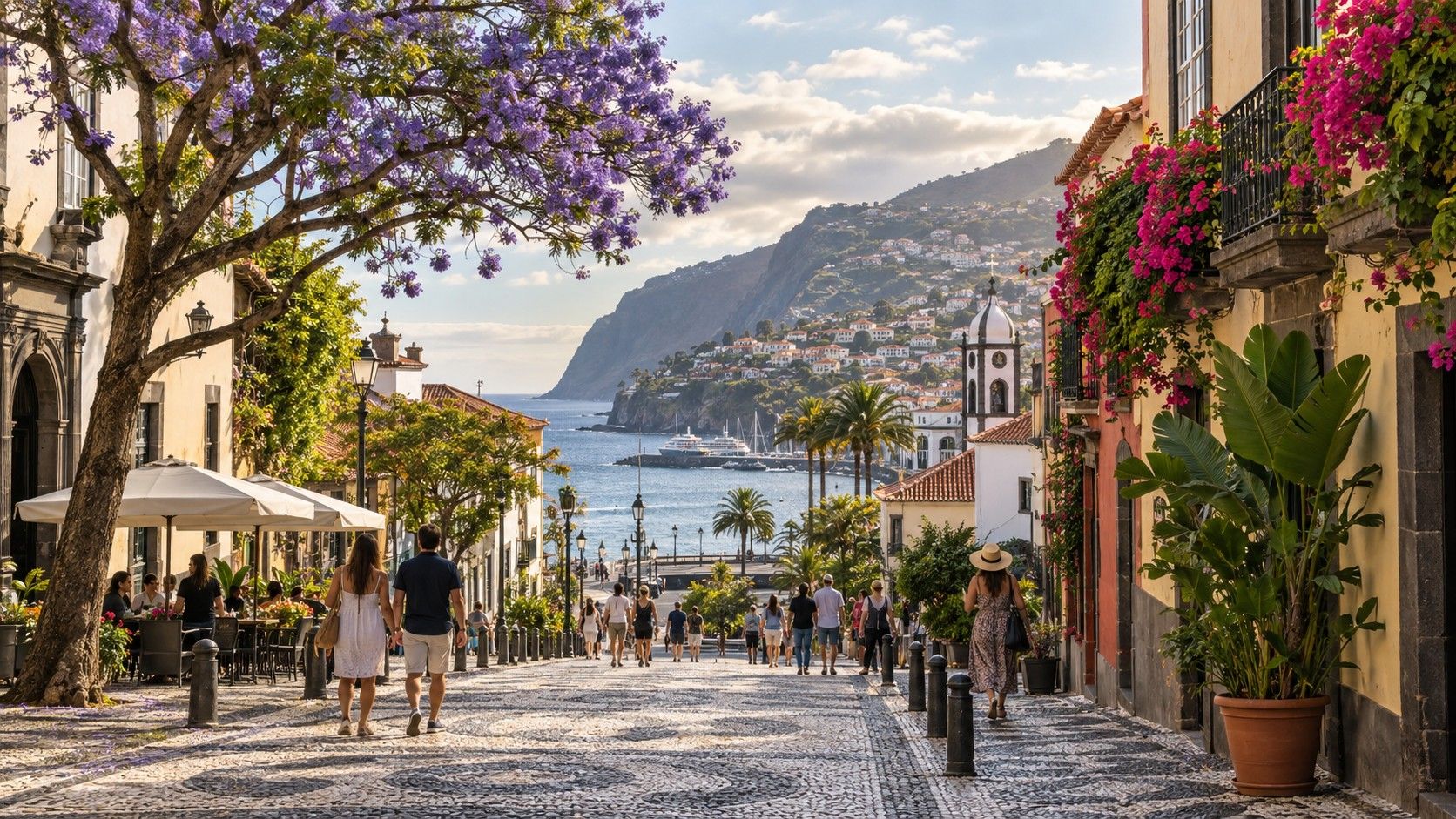
Begin near Avenida Arriaga, where the centre is flat enough to find a rhythm without immediately climbing. The cathedral, municipal garden and tiled pavements sit within a short walk, but there is little value in ticking them off at speed. Look into side streets, notice which cafés are busy with office workers rather than tour groups, and continue toward the seafront. This creates a useful mental map before the streets become more confusing east of the centre.
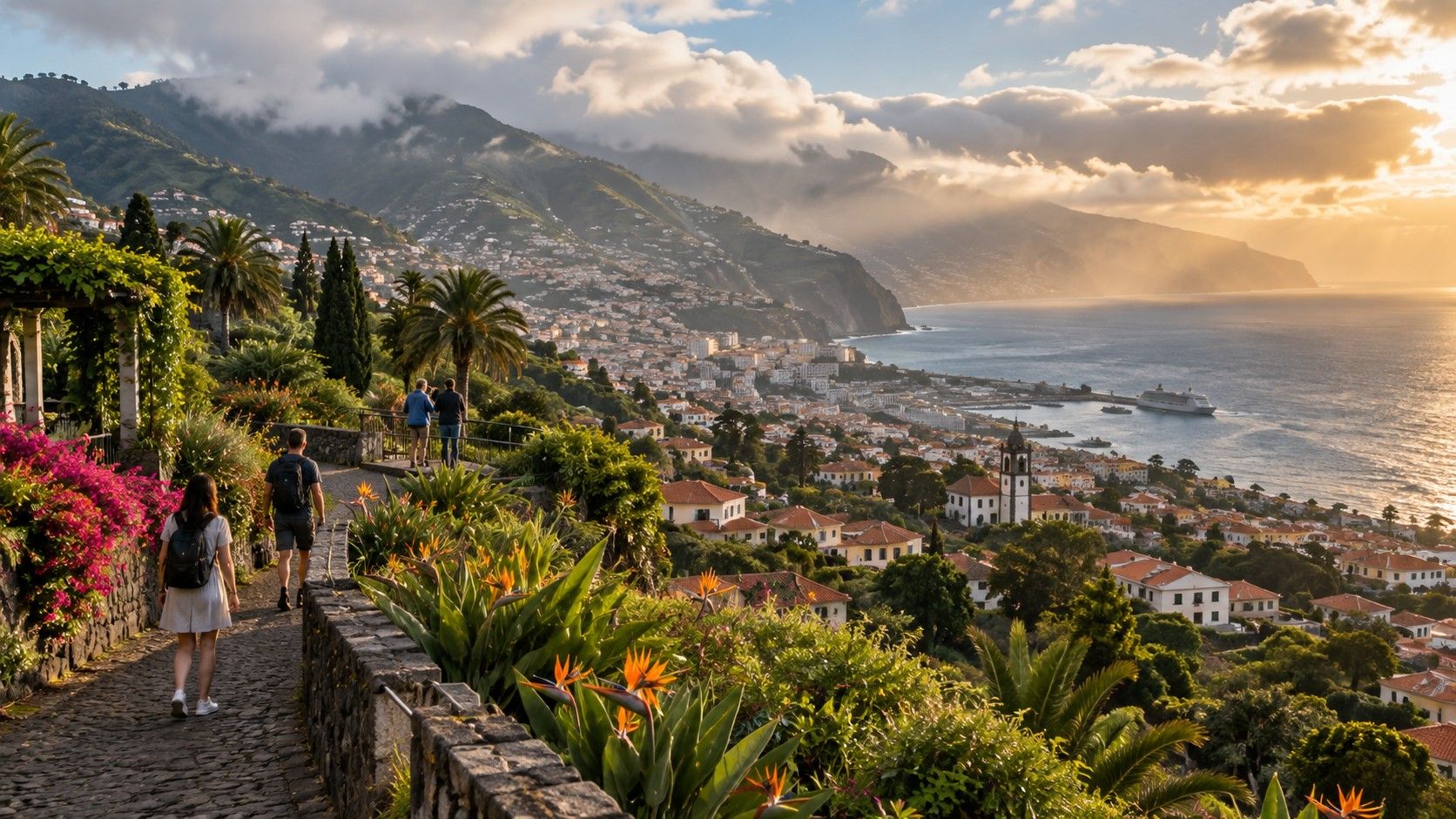
The waterfront promenade is the easiest spine for a first morning. It connects the marina, Praça do Povo and the edge of Zona Velha without demanding constant navigation. Cruise-ship days change the atmosphere, particularly around the marina and cable car, so reverse the walking route if a large queue has already formed. One of the most practical things to do in Funchal is simply to use the flat shore as a reset between steeper neighbourhoods.
Leave room for an unplanned lunch. Central Funchal contains polished tourist menus, small counters and ordinary restaurants within a few blocks, and the busiest frontage is not automatically the best choice. Check the day's dishes and whether prices include the sides you expect. A long lunch makes sense in heat; on a cloudy day I would keep moving and save the longer meal for evening.
Use the market and Zona Velha without treating them as a checklist
Mercado dos Lavradores is most active earlier in the day, especially for fish and produce, but it is also a place where presentation can outrun value. Walk through, compare prices before agreeing to samples, and do not feel obliged to buy unfamiliar fruit by weight without confirming the final cost. The building and flower stalls are worth seeing even if the basket remains empty. Opening hours vary by day, and Sunday is a poor moment to expect the full working-market scene.
From the market, continue into Zona Velha along Rua de Santa Maria. Painted doors draw attention, yet the useful detail is how quickly the street changes from quiet morning passage to dense restaurant corridor. Visit before dinner service if you want to look at the doors and architecture. Return later only if the menus appeal; there are good evening areas elsewhere, so choosing a table because a waiter intercepted you is unnecessary.
At the eastern end, the fort and nearby shore give the old town a clear stopping point. Swimming access depends on conditions and the specific facility, not on how calm the water appears from above. If you only want a pause, the sea wall and public spaces are enough. Then walk back along the waterfront rather than repeating the restaurant street. That loop keeps the day varied and avoids unnecessary climbing.
Choose how to reach Monte before joining a queue
The cable car is the most visual way to reach Monte, but it is neither the only route nor always the quickest. From the lower station, cabins climb above roofs and ravines, giving a good impression of Funchal's steep geography. At busy times the wait can take a meaningful part of the morning. A public bus costs less and places you closer to everyday city life; a taxi works well for two or more people who value time and a direct drop-off.
| Option | Advantage | Trade-off |
|---|---|---|
| Cable car | Wide city and harbour views | Queues and higher cost |
| Bus | Budget-friendly local route | Timetable and limited space |
| Taxi | Direct and useful for a small group | Less scenic as an attraction |
Monte Palace and the church area require real time; combine them only with other stops you genuinely want. The wicker toboggan is a separate paid experience and does not return passengers to central Funchal. Its lower endpoint leaves a further walk, bus ride or taxi journey. Decide before riding how you will continue. Watching the carros de cesto depart is free and often enough for travellers who dislike the price or the exposed seated descent.
The Madeira Botanical Garden is not next door to every Monte attraction, despite both appearing on the same hillside. Connecting transport, walking gradients and separate admission can make an overloaded day. Pick one major garden and explore it properly, or accept that the second day will be dominated by transfers. A Funchal travel guide should make that friction clear rather than presenting the hillside as a cluster of adjacent gates.
Keep gardens, museums and rain in the same decision
Funchal's gardens are at their best when there is enough visibility to appreciate the slopes and enough time to wander beyond the first photogenic terrace. After heavy rain, paths can be slick, while intense midday sun makes exposed sections tiring. An early garden visit followed by an indoor afternoon is a sensible sequence. Carry a light layer because Monte can feel cooler than the waterfront even on the same day.
For rain, choose a museum because its subject interests you, not merely because it has a roof. The city offers Madeira history, religious art, photography, wine and football-related collections, each with different opening patterns. Smaller museums may close for lunch or on particular weekdays. Verify the current hours that morning and keep two nearby choices rather than crossing the city for a locked door.
A wine lodge or tasting room can fill a damp hour, but tasting on an empty stomach after steep walking is a poor combination. Ask what is included and whether the format explains the styles or simply serves several glasses. Non-drinkers can use the same time for Blandy's-area architecture, cafés or shops around the centre. Rain in Funchal often arrives in bursts, so an all-day indoor plan may be unnecessary.
Spend the evening where dinner does not feel like another attraction
Zona Velha is lively and convenient, though the density of menus and invitations can feel tiring after a day of sightseeing. The streets around the cathedral and west toward the hotel zone offer different moods. Central lanes suit a short walk between dinner and a drink; the Lido area has a broader promenade and many restaurants but requires a bus or taxi if your accommodation is in the old centre.
Check the return route before settling in. Urban buses become less frequent later, and a downhill walk to dinner becomes an uphill journey home. Madeira wine bars, poncha-focused venues and cocktail places are not interchangeable. Alternate alcohol with water, particularly after a sunny day, and avoid treating a strong poncha as a harmless fruit drink.
Two days are enough to understand central Funchal without exhausting every museum or garden. The useful test is whether the route leaves time to sit by the harbour, observe the market and handle Monte without rushing. When deciding what to see in Funchal, fewer well-connected stops usually produce a clearer impression than a list assembled from ten separate maps.